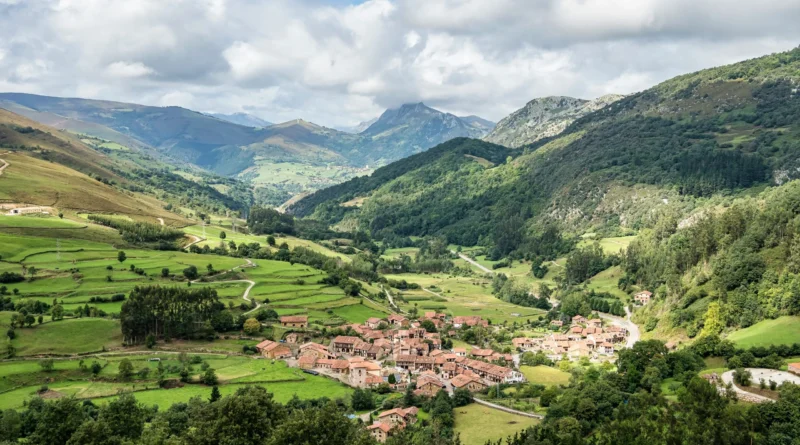
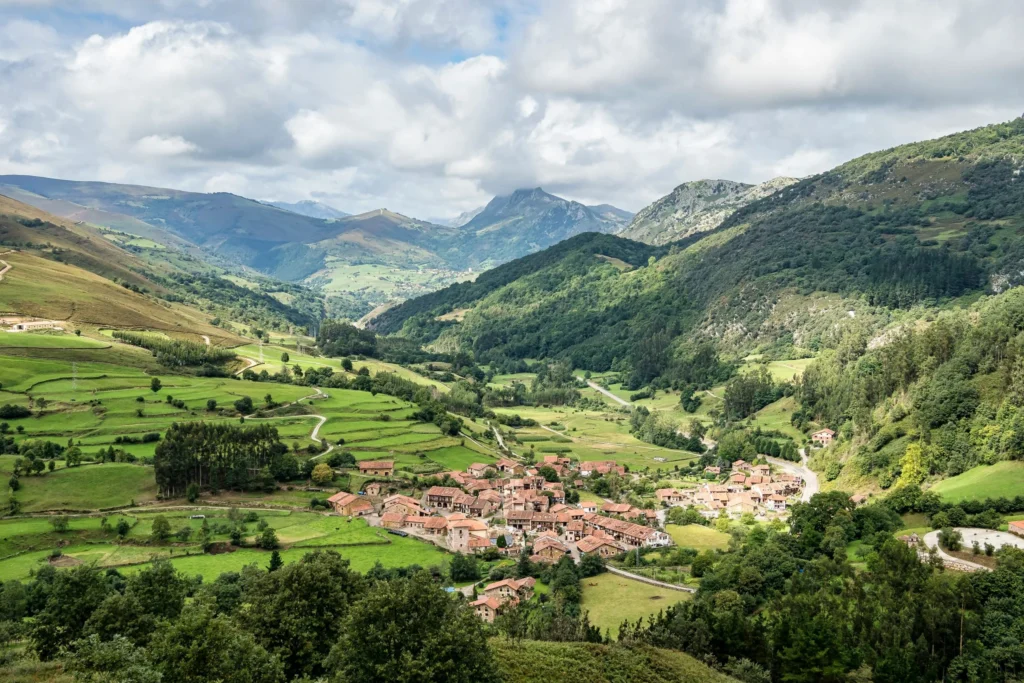
Let’s place ourselves in the year 1967, when an interesting movement began in Spain, promoted by people with foresight who created family-run accommodations in search of new economic horizons and businesses that would help complement the family economy… an era began with what were called “Farmhouses” [“Casas de Labranza”], whose idea was to attract a segment of customers who wanted something different from beach vacations.
They wanted to experience contact with nature in generally rustic houses and venues with “soul”… a desire to spend their days more peacefully in the middle of nature with activities that were very novel compared to their daily routine… a different, “simple” vacation in a rural setting, away from the hustle and bustle and noise of the world, surrounded by forests, meadows, orchards, fruit trees, farm animals and freedom…. owners who welcome you and pamper you, proud of everything they offer you with such closeness that within five minutes you’re already on a first-name basis… a treatment that is as human and emotional as it is experiential.
They accommodate us in a room with a certain level of comfort, good “home-cooked” food with their own or nearby natural products, and with a major differentiating ingredient in the “content of the menu”…. the hands of the person cooking for us and the family atmosphere that is created.
Later, in the 1980s/90s, we began to give more importance to this type of vacation, although trying to make it more sophisticated, and we started calling it “Rural Tourism”… I think that lovers of this segment of vacation or weekend tourism are on the rise… Many more people have discovered over the years the extraordinary attractions and advantages that this type of accommodation offers to those who love nature in the full sense of the word… who continue to seek experiences and sensations in natural environments that are unknown or unusual: mountains, small towns, their shops with local products, bars, inns, valleys, forests, rivers, lakes, wild and domestic animals… in a clean, healthy and welcoming natural habitat, not without comforts and some novelty-related discomforts for city dwellers…. like the sound of church bells or the rooster crowing in the morning…. places where you can breathe cleaner air and see the stars…
We discover different crops, livestock, home vegetable gardens. It allows us to do small climbs, excursions and walks, swim in lakes and rivers, go fishing, go river rafting, skiing, bike rides, mushroom picking, buy local products and taste the riches of the village’s typical cuisine…. Without realizing it, for a few days we become part of an environment different from the one we are used to, creating an unusual contact with nature. From that moment on we must become aware and learn to behave with respect for the environment and other people’s property, to be conscious of the importance of the environment by respecting it, taking care of it, promoting sustainability, controlling our carbon footprint, consuming local products, and managing and controlling waste…. !!
True Km.0 !! healthy products from the moment of cultivation, raising, preparation, seasoning and… processes whose aromas provoke our senses and delight us when we consume them…. I remember the stews, pots and homemade boiled dinners, cannelloni, omelets, rice dishes, grilled or roasted meats, sausages, cheeses, eggs, breads, jams, milk or wines… etc. etc. Being able to consume such products without them having been stored, preserved and processed, or packaged in plastic, handled, transported, distributed, exposed to different temperature changes…. it’s noteworthy! I think it’s a temporary privilege…. I believe that this rural world, to which we still don’t give the importance it deserves… we continue to ignore it, perhaps because on our emotional scale the offer of cosmopolitan life weighs more, driven by the resources that “imprison” us, or at least due to ignorance or fear of adapting to a rural environment that we don’t know…
I think it’s a tourism segment that we must protect and equip with required quality standards, with judgment, for a certain level of comfort, but limiting the number of licenses associated with a clear and strict specific product in its concept of genuine and defined business, for controlled and evolutionary growth, non-invasive and non-bothersome.
They are, I believe, small businesses of a certain quality in the rural world, which with their accommodations and services attract a family segment or small, quiet groups, with a certain purchasing power, eager to bring their five senses to life and to supply themselves with local products.
They are customers who by nature respect the environment and other people’s property; who bring wealth to villages, even promote them, and create economic life generating opportunities for small-scale growth.
The rural world for vacations also offers us affordable and balanced prices for the service and quality they provide…., today it is still used by a minority of customers and most of the accommodations are seasonal and for weekends, which is why they are not considered a business “to live off of”, since their occupancy is usually limited to short seasons, long weekends and weekends. However, it acts as income that complements the owners’ economy; still far from aggressive investment speculation.
Without a doubt, the offers in terms of quality and diversity will grow a lot… initially due to growing demand and because its offering is very balanced and affordable for the type of market that consumes it, but above all because of the experiences it offers, starting with the open and welcoming treatment from the property owners or hosts of the “house”, willing and family-oriented, which generally and usually provide us with such human sensations and experiences, from the owners of the venues or accommodations, the shops and the local people…
Perhaps the regional governments and local town councils should look more toward the “future-facing destination” of their villages, and subtly begin preparing the codes of conduct that should be required to create the desired atmosphere of coexistence between residents and visitors. They should accept the advantages that this type of business would provide them by studying their needs and dedicate money and effort to it. Promote it, yes, but preventively and properly controlling this tourism segment of accommodations; because perhaps in them lies the survival, prosperity and growth of their towns and villages.
José Aleixandre Caballero : Technical Director Advisor for Tourism Companies and Activities