Tony Aviles : There are cities that merely accumulate ruined vestiges, and then there is Istanbul: a living, convulsive, and elusive organism where the Byzantine and Ottoman past does not rest beneath museum glass, but rather violently collides with an artistic vanguard as fierce as it is cosmopolitan. Straddling two continents, the Turkish metropolis has ceased to be the exotic bridge described by romantic travelers to become one of the neuralgic epicenters of global contemporary art. Here, every street corner breathes a creative tension that defies geopolitical clichés and shakes human consciences.
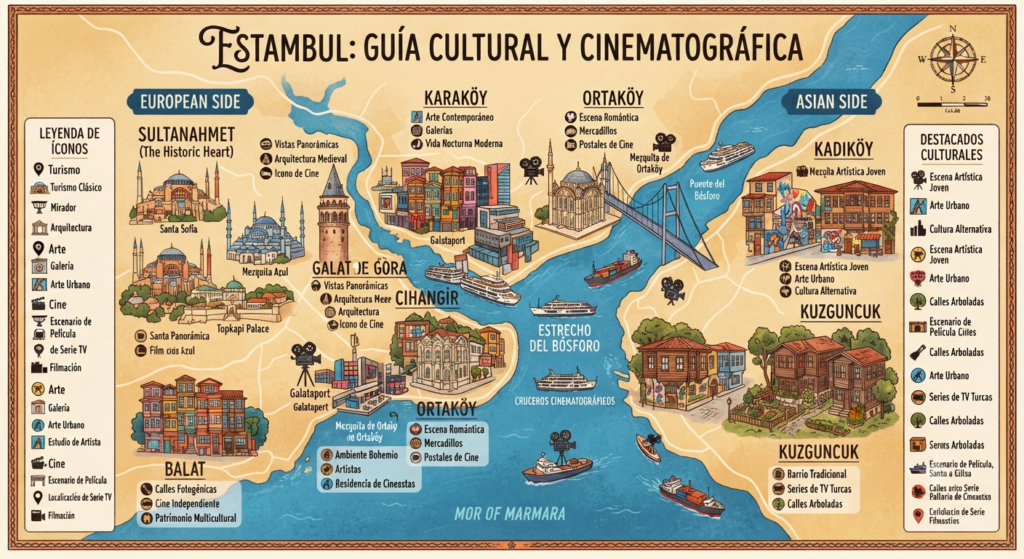
The Geography of Fracture, Rebirth, and the Arrival of Villa del Arte The cultural map of Istanbul has been redesigned with a surgeon’s precision and a venture capitalist’s audacity. From the monumental renovation of docks and former port warehouses converted into museum colossi—such as the iconic Istanbul Modern designed by Renzo Piano in Karaköy—the city lives in an uninterrupted effervescence. Art in Istanbul is not a
bourgeois pastime; it is a political declaration, an identity necessity, and a trench against globalizing uniformity.
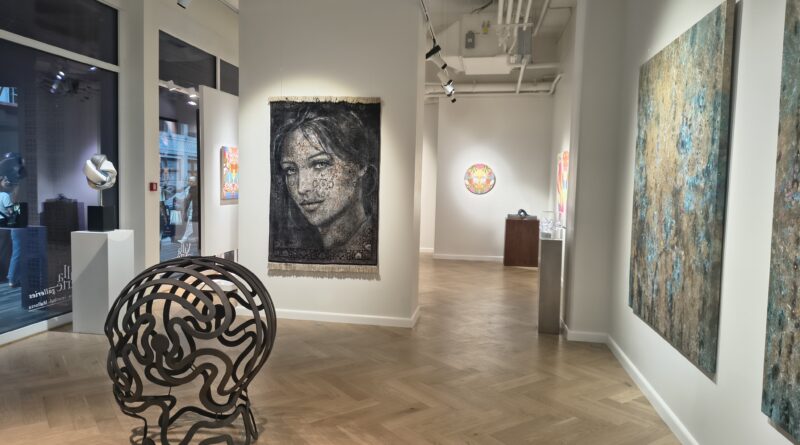
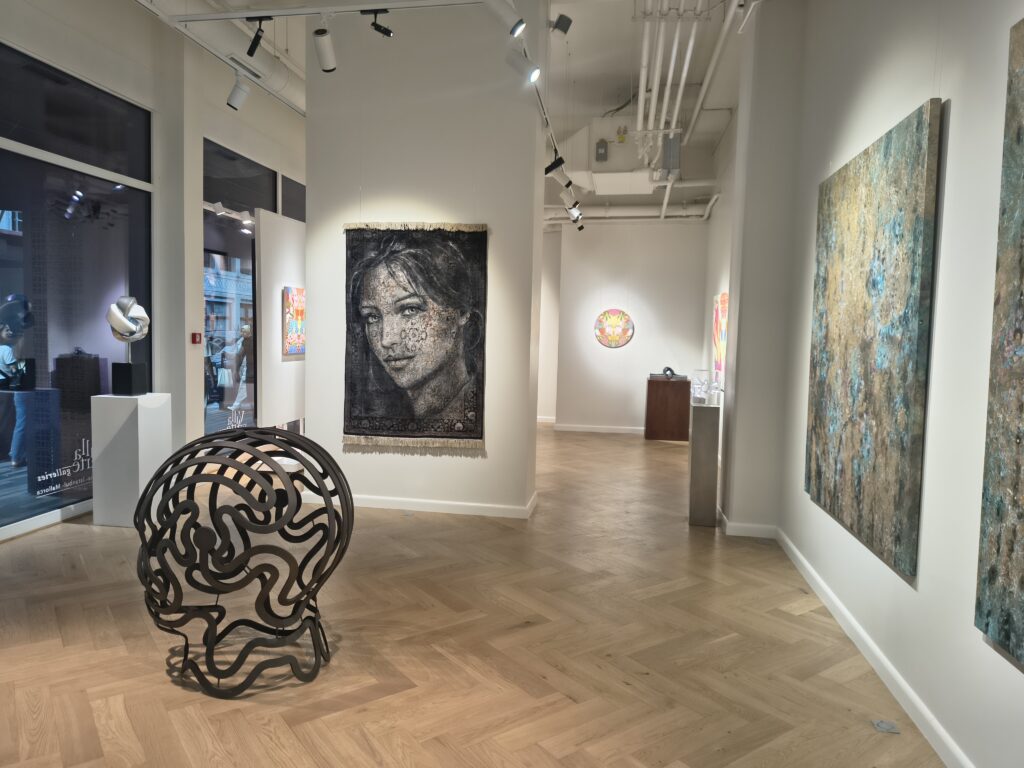
In this chessboard where the ghosts of the Ottoman Empire converge with the urgency of liquid modernity, the definitive consecration of the city as the great artistic capital of the 21st century cannot be explained without the irruption of global players who have bet without a safety net on the heart of the Bosphorus. The opening of the permanent headquarters of Villa del Arte Galleries in the Beyoğlu district—nested in Kemankeş Street in Karaköy—is not a mere commercial expansion, but a high-definition aesthetic manifesto.
Originally founded in Barcelona in 1999 by Bert van Zetten, Jutta, and Marcel Huisman, this gallery understood with surgical clairvoyance that European contemporary art suffered from an unsustainable claustrophobia when locked within the traditional circuits of Paris, London, or Basel. After consolidating a model of success based on absolute plurality—bringing together world-class painting, sculpture, and photography in emblematic spaces such as Paseo de Gracia—the leap to Istanbul responded to an almost biological necessity. After years of successfully shaking up the waters of the Contemporary Istanbul fair, the gallery’s management understood that the bridge between Europe and Asia demanded a physical trench open three hundred and sixty-five days a year.
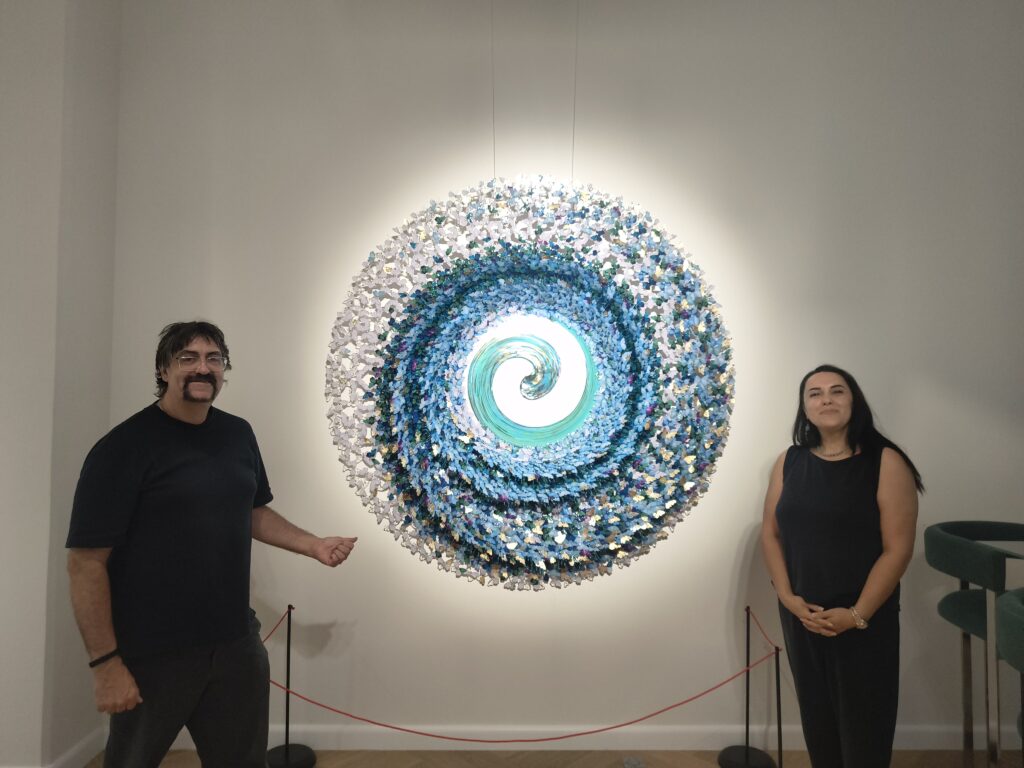
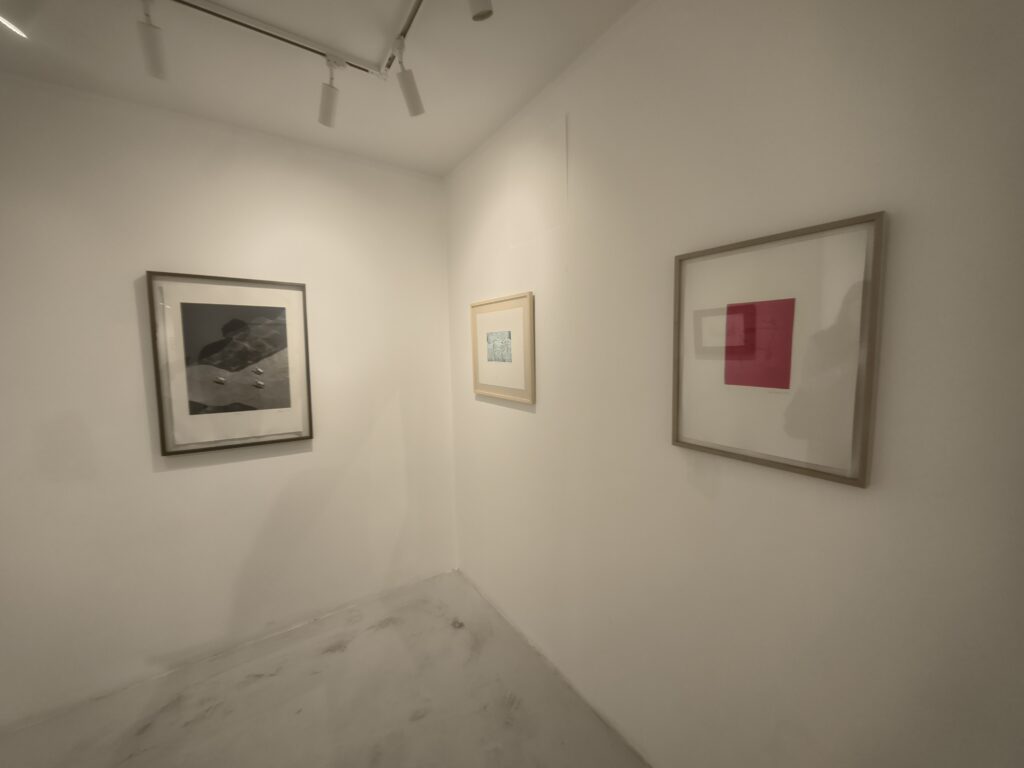
Villa del Arte’s Istanbul space operates as a seismograph of contemporary tensions. Strategically located in the port and urban avant-garde zone, the venue functions as a catalyst where undisputed international creators and the emerging talent of Eurasia converse. There, the work ceases to be an object of bourgeois decoration to become a territory of intellectual confrontation. Metallic textures, hyper-realist precision, and conceptual discourses that the gallery fiercely defends hybridize with the convulsive pulse of a city that never sleeps.
The relevance of the model that Villa del Arte has imported to the European shore of Istanbul lies in its cross-border vocation. Far from the orientalist condescension with which the West has historically looked at Turkey, the gallery proposes a dialogue among equals, an exercise of hybridization where the fractures of Turkish identity—between Kemalism, the weight of Islamic tradition, and digital globalization—find an un-censored mirror in contemporary visual art. Betting on Istanbul in these times, amid economic volatility and political shifts lashing the region, demands an audacity that only major cultural catalysts possess; irrefutable proof that true contemporary art does not take refuge in the tax havens of free ports, but in frontier cities, where beauty burns and transforms daily.
The Totems of Current Plastic Arts: Who Sculpt the Present. To understand the magnitude of the current Turkish phenomenon, one must look at its plastic artists—creators who dominate international art fair circuits without losing their anchor in national contradictions:
● Taner Ceylan: The undisputed master of contemporary hyperrealism. His oils, of staggering technical precision, dissect identity, homoeroticism, Ottoman history, and human vulnerability with a psychological charge that leaves viewers breathless in galleries from New York to Istanbul.
● Ahmet Güneştekin: A plastic force of nature. His monumental installations and paintings fuse the ancestral myths of Anatolia and Mesopotamia with geometric abstraction and conceptual art, turning collective memory into a visual spectacle of color and light that defies traditional scales.
● Hale Tenger: An undisputed benchmark of conceptual art and large-scale installations. Her work addresses with incisive acuity sociopolitical memory, institutional violence, and Turkey’s urban traumas, utilizing everyday objects and ephemeral architectures to build discourses of profound poetic resistance.
● Mehmet Güleryüz: The patriarch of figurative expression. With a career spanning decades, Güleryüz continues to use drawing and painting as tools of visceral agitation, portraying the neuroses of modern society with a nervous, critical, and profoundly free stroke.
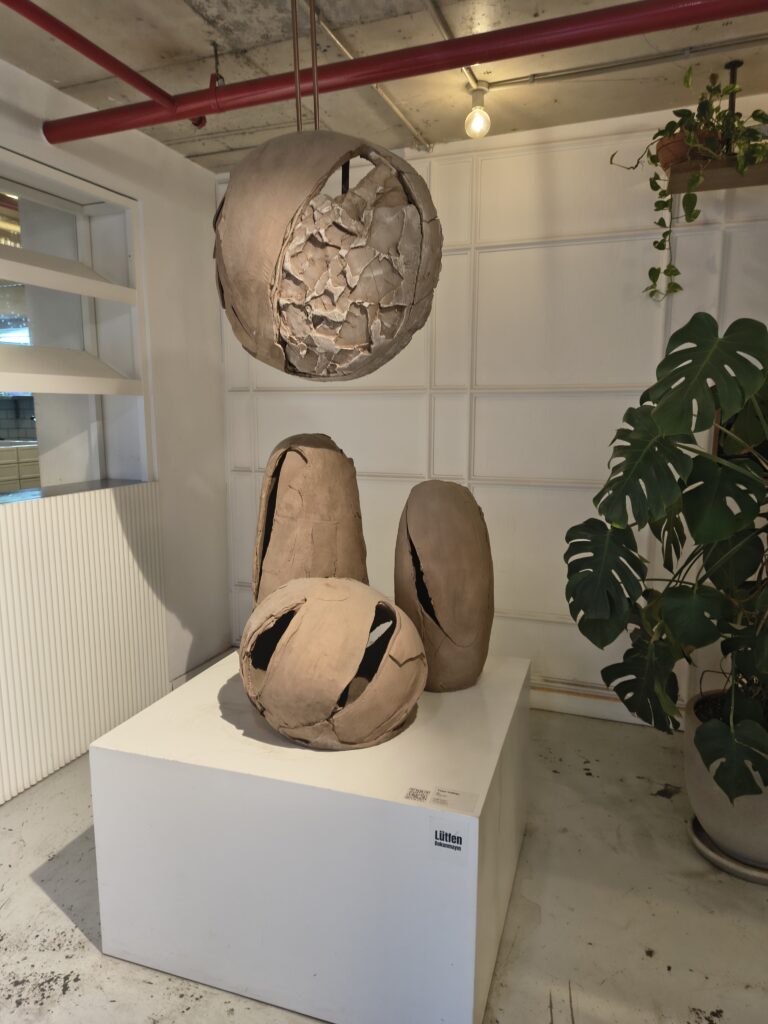
Overflowing Art: From White Cubes to Author Pastry What is fascinating about today’s Istanbul is that art has broken the walls of the white cube to infiltrate everyday life. The aesthetic experience is not exhausted in large pinacotecas; it is tasted, inhabited, and discussed in urban interstices. A paradigmatic example of this symbiosis between design, craftsmanship, and high culture is Grandma Studio (better known as Grandma), located in the select Nişantaşı neighborhood. Far from being a simple bakery, this artisanal workshop has become the informal salon of architects, designers, art critics, and independent creators. With an architectural proposal signed by avant-garde studios and an absolute devotion to organic produce treated with sculptural rigor, Grandma exemplifies what Istanbulites understand as “pastry with art”: the conviction that beauty and excellence must also impregnate the most intimate and everyday rituals of human life.
Istanbul cannot be contemplated with indifference; it is suffered, admired, and celebrated. In its clandestine workshops, in its international avant-garde galleries like Villa del Arte, in the hyperrealist strokes of its painters, and even in the aroma of sourdough from a Nişantaşı studio, the metropolis proves that its aesthetic vocation is unquenchable. The Bosphorus remains witness to how art, once again, rescues civilization from its own labyrinth.