Women in Tourism: H.E. Shaikha Al Nowais Charts a Path Toward Inclusive Global Leadership
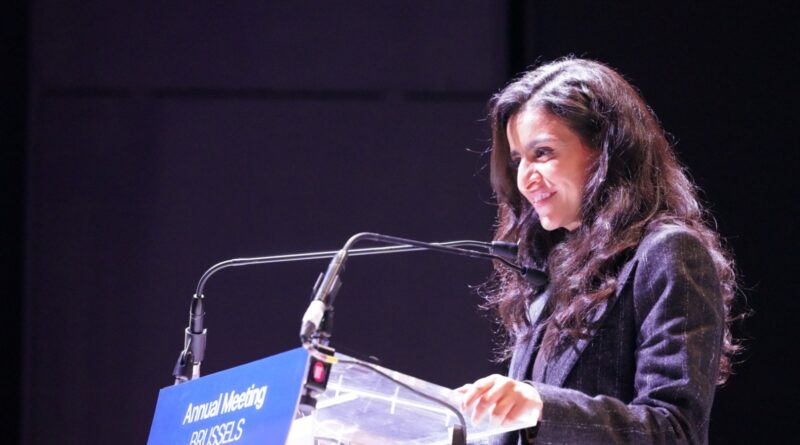
At the Global Tourism Forum Annual Meeting 2025 in Brussels, the energy in the hall shifted palpably as H.E. Shaikha Al Nowais, the Secretary General Elect of United Nations Tourism, took the stage for her keynote address, “Women in Tourism: Empowering Leadership for a More Inclusive Future.”
Her remarks came at a defining moment for an industry responsible for one in ten jobs worldwide—and one still grappling with gender imbalance across leadership ranks. With clarity and conviction, Al Nowais outlined a vision that positioned inclusivity, sustainability, and partnership not as ideals, but as strategic imperatives for the tourism economy of the future.
Her remarks came at a defining moment for an industry responsible for one in ten jobs worldwide—and one still grappling with gender imbalance across leadership ranks. With clarity and conviction, Al Nowais outlined a vision that positioned inclusivity, sustainability, and partnership not as ideals, but as strategic imperatives for the tourism economy of the future.
A New Era for Global Tourism Leadership
Opening her keynote with gratitude to the Global Tourism Forum and its organizers, Al Nowais reflected on the symbolism of beginning her tenure in Brussels—a city synonymous with international cooperation. “It is an honor to be here with such respected leaders in tourism,” she began, noting that her upcoming role at the helm of UN Tourism represents both continuity and change.
“I will focus on five main pillars,” she said, before laying out a comprehensive framework for sustainable, inclusive growth:
Sustainability – Protecting the planet while keeping tourism as a driver of economic progress.
Inclusivity – Expanding opportunities for local communities, women, and youth.
Smart Tourism – Leveraging digital tools to make travel more efficient and accessible.
Strong Foundations – Investing in safety, healthcare, and infrastructure.
Partnership and Peace – Strengthening global collaboration as a cornerstone for responsible tourism.
Each pillar, she argued, is essential to ensuring that tourism remains both a force for prosperity and a vehicle for shared humanity.
Sustainability as Strategy, Not Slogan
Al Nowais emphasized that sustainability must move beyond rhetoric. “Protecting our planet while keeping tourism a driver of growth is not a contradiction,” she asserted. Instead, she described sustainability as the new architecture of competitiveness, where responsible resource use, carbon neutrality, and community engagement drive brand value and visitor loyalty.
Her comments reflected a growing sentiment within the industry: that green transformation equals market advantage. Destinations and companies that align their practices with environmental and social responsibility, she suggested, will define the next decade of tourism leadership.
Echoing the forum’s broader theme of transformation, she called on governments and private stakeholders to embed sustainability in every policy and partnership, from urban planning to investment incentives. “We must build models that work with nature, not against it,” she said—a pointed reminder that global tourism’s recovery and resilience hinge on environmental stewardship.
Empowering Women and Youth in the Value Chain
If sustainability was her structural pillar, empowerment was her emotional one. Al Nowais spoke with conviction about the need to place women and young people at the center of tourism’s next growth cycle.
“Tourism employs millions of women around the world—but too few are in decision-making positions,” she said. The statement resonated deeply with the audience, as data from UN Tourism shows women make up over 54% of the tourism workforce but hold less than 25% of executive roles.
Her solution is to redefine empowerment through opportunity: accessible training, mentorship, entrepreneurship support, and financial inclusion programs designed to close the leadership gap. “When women lead, communities thrive,” she said simply.
She also underscored the role of digital transformation in unlocking opportunity for the next generation. Through smart tourism tools, e-learning platforms, and digital literacy initiatives, young innovators—especially in emerging destinations—can access global markets without leaving their local roots.
This, Al Nowais suggested, is how inclusivity becomes scalable: by connecting human potential to digital access.
Smart Tourism and the Digital Leap
Turning to the theme of smart tourism, Al Nowais described digitalization not just as a technical upgrade, but as a philosophy of empowerment. AI-driven personalization, data analytics, and contactless systems, she argued, are reshaping the traveler experience while making tourism more resilient to future disruptions.
“The future traveler is digital, conscious, and connected,” she said. “Our systems must reflect that reality.”
She also cautioned that innovation must remain human-centered. Technology should enhance—not replace—the essence of hospitality: empathy, culture, and connection. Her call for “smart tourism with a human heart” captured the delicate balance between progress and preservation that defines the sector’s evolution.
Building Strong Foundations for a Safer, Healthier Future
In her fourth pillar, Al Nowais addressed the structural realities of global tourism—healthcare, safety, and infrastructure—which she described as “the foundations upon which trust and confidence are built.”
From pandemic recovery to geopolitical uncertainties, the sector’s resilience depends on robust public systems and partnerships. She urged investment not only in physical infrastructure but also in institutional capacity and crisis readiness, noting that sustainable tourism cannot exist without stability and preparedness.
Her remarks drew applause as she linked safety and inclusivity: “When we invest in safety and health, we invest in people’s right to travel with dignity.”
Partnership and Peace: Tourism as a Bridge
Al Nowais closed her keynote by returning to the human dimension of global tourism—its power to connect people and cultures. “Tourism is not only about destinations; it is about dialogue,” she said. “When people meet, understanding grows. And with understanding comes peace.”
In an era of global fragmentation, she positioned tourism as a bridge-builder—a force that transcends borders and ideologies. Her appeal for deeper partnerships across nations, sectors, and communities struck a hopeful tone.
“Peace and tourism reinforce each other,” she concluded. “Our shared industry must continue to be a source of unity and hope.”
A Vision Rooted in Humanity

As Shaikha Al Nowais transitions into her leadership role at UN Tourism, her keynote in Brussels stands as both a manifesto and a mission. Her five-pillar framework—sustainability, inclusivity, smart innovation, strong foundations, and partnership—offers not just direction, but inspiration for an industry seeking purpose amid transformation.
The message was clear: the future of tourism is not merely about technology or economics—it’s about people, planet, and partnership. In her words and presence, Al Nowais embodied a new kind of leadership: one that measures progress not just in profits or arrivals, but in empowerment and equity.
As the applause filled the room, one could sense a quiet consensus: the next chapter of global tourism will be written by leaders who, like her, see inclusion not as an aspiration—but as the foundation of growth itself.
REF. World Tourism Forum Institute 2026.