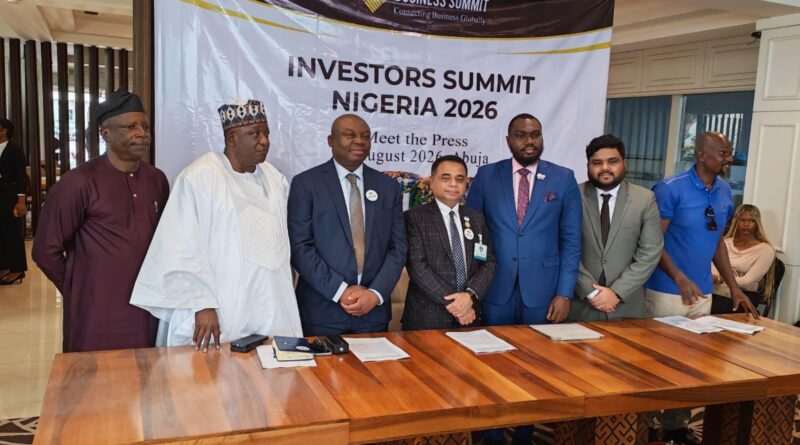
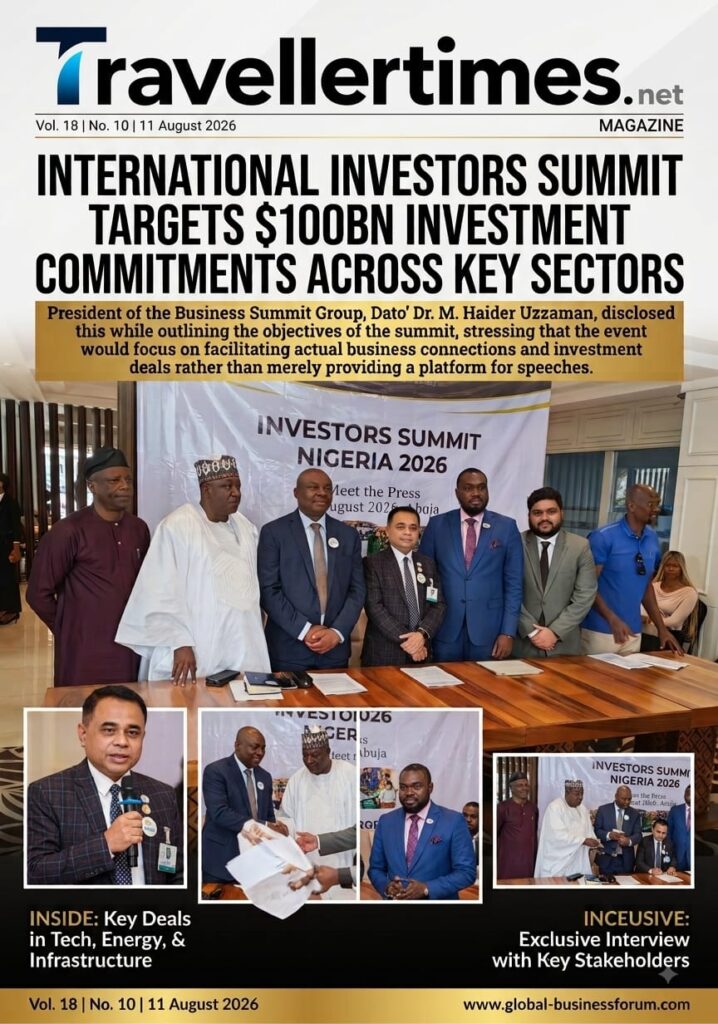
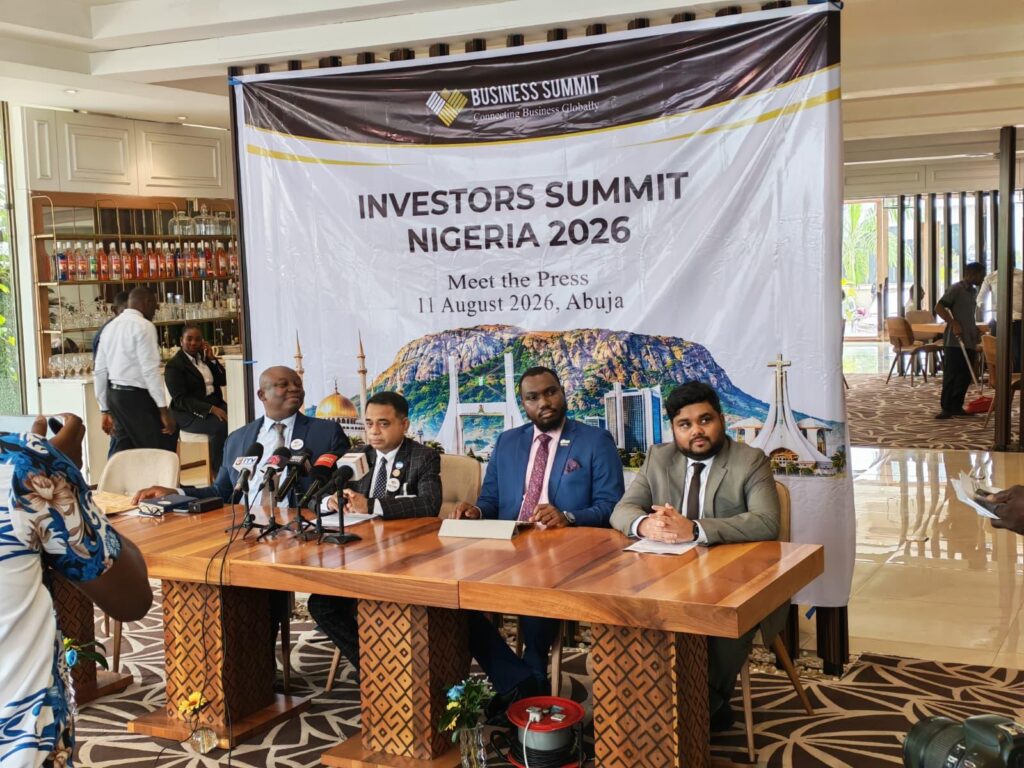
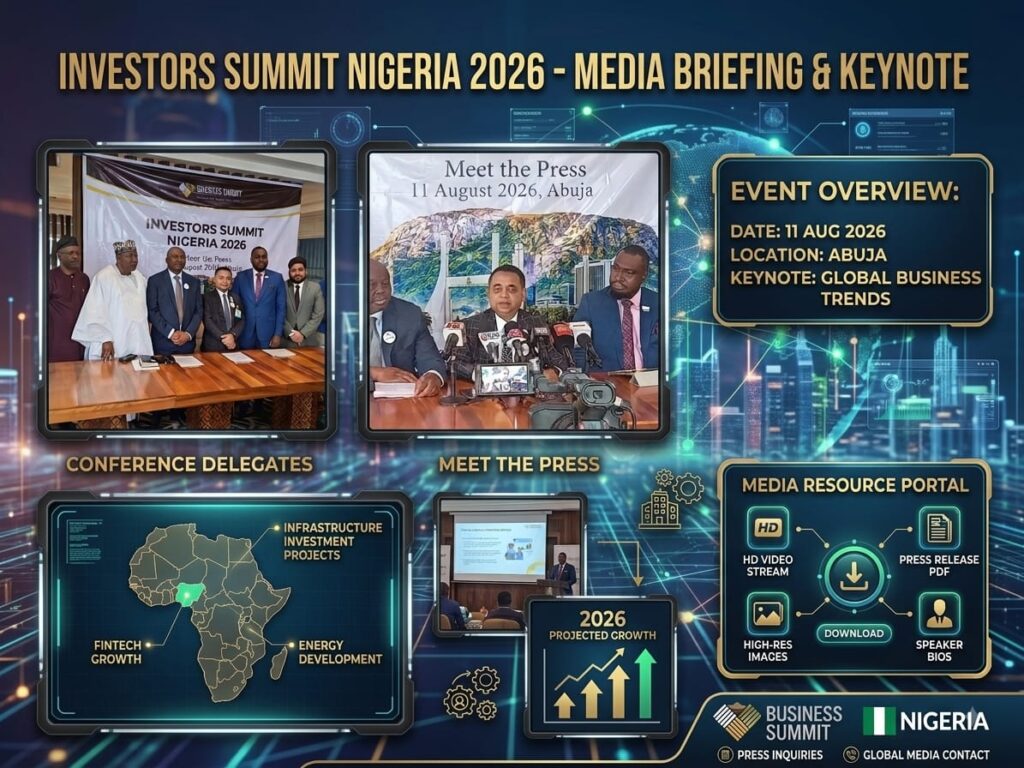
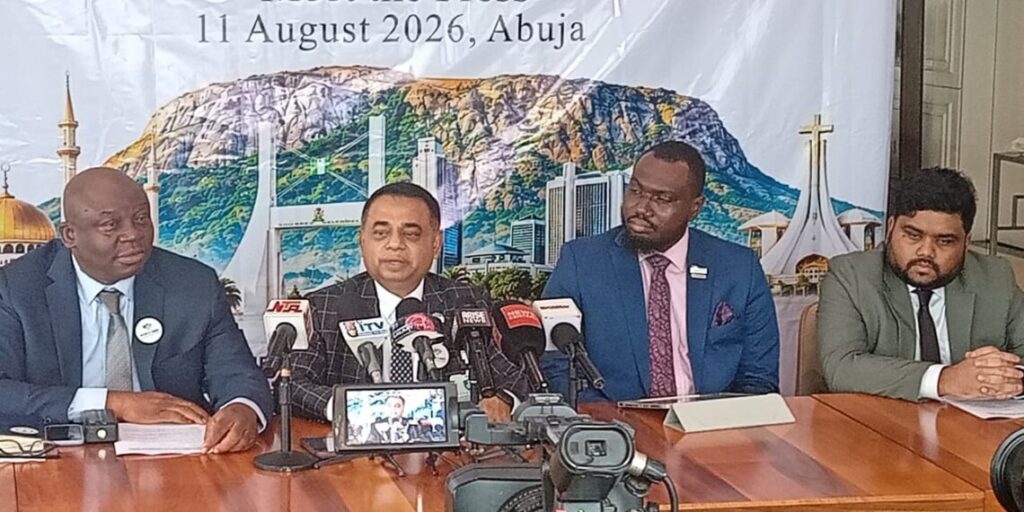
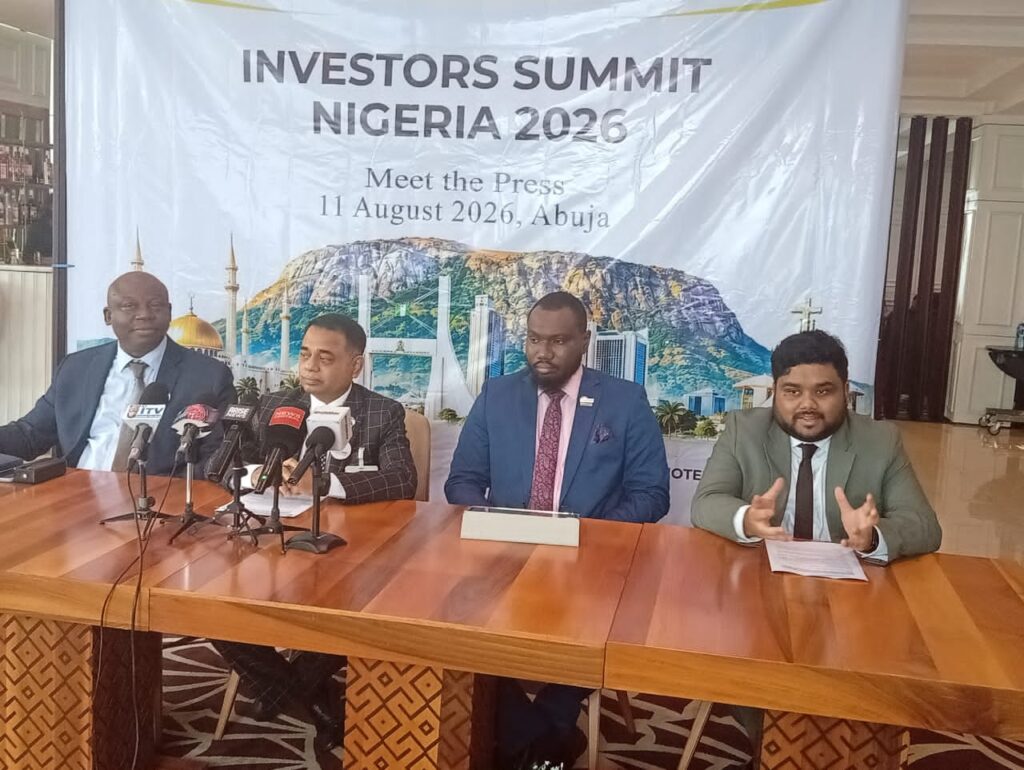
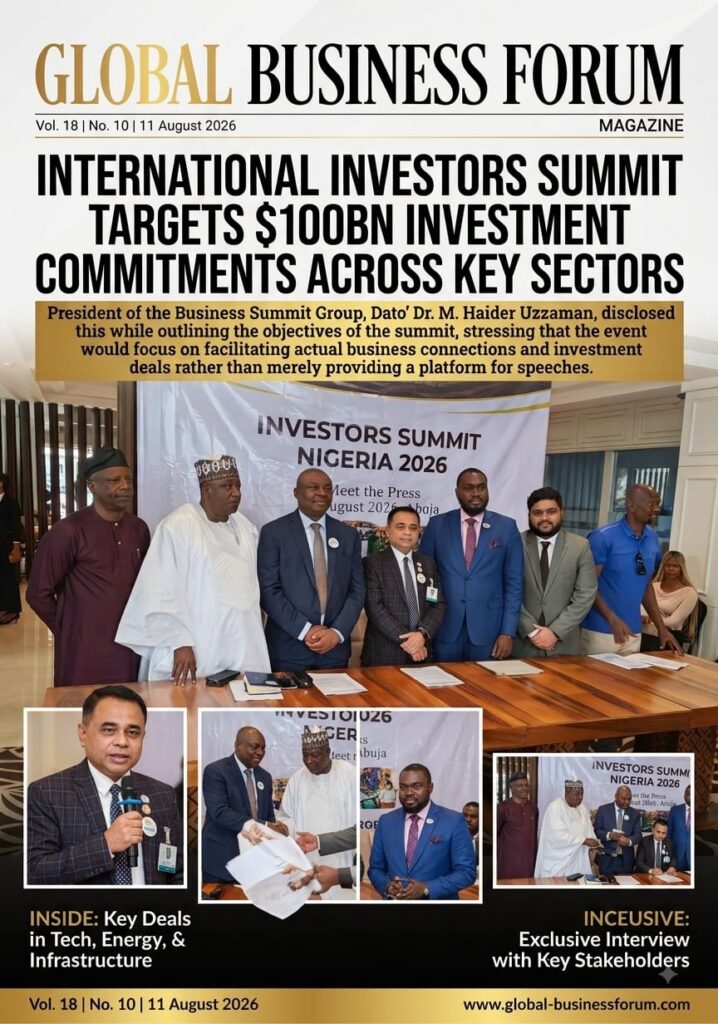
ABUJA, NIGERIA — The organisers of the International Investors Summit Nigeria 2026 have set an ambitious target of mobilising more than $100 billion in investment opportunities and commitments across strategic sectors of the Nigerian and African economies.
The high-level summit, scheduled for November 10 and 11, 2026, in Abuja, is expected to bring together global investors, government representatives, corporate leaders, and owners of investment-ready projects from over 50 countries.
President of the Business Summit Group, Dato’ Dr. M. Haider Uzzaman, disclosed this while outlining the core objectives of the upcoming event. He strongly emphasised that the 2026 summit will deliberately move away from traditional ceremonial speeches, focusing strictly on facilitating direct business connections, public-private partnerships, and actionable investment transactions.
Feature Story: Moving Beyond Talks to Actionable Deals
For decades, international business conferences hosted across Africa have followed a predictable, well-worn script: high-level panel discussions, sweeping political speeches, and grand declarations of economic potential. While these events successfully diagnose the continent’s infrastructure and funding gaps, they routinely fall short of the finishing line—transforming high-profile networking into actual capital deployment.
The upcoming International Investors Summit Nigeria 2026 plans to rewrite that script entirely.
By setting a massive $100 billion investment mobilization target, the Business Summit Group is introducing a transactional, results-oriented framework designed to match verified global capital directly with “ready-to-go” African projects.
A Proven Blueprint for Capital Injection
The confidence behind this year’s ambitious $100 billion target stems from real-world success. At the previous edition of the summit held in Bangkok, Thailand, a selective delegation of Nigerian enterprises and state representatives tested this direct-match formula. The results were immediate.
Within just six months of the Bangkok event, the Plateau State Government alone successfully converted its initial summit leads into more than $1 billion worth of secured investment commitments.
This rapid turnaround proved a critical structural point: when regional decision-makers sit directly across the table from international investors with fully structured, risk-assessed, and documented business models, deals move seamlessly from conversation to execution.
Strategic Sectors Primed for Inflow
The summit arrives at a pivotal moment for Nigeria and the wider West African region, where economic diversification has shifted from a policy preference to an absolute fiscal necessity. To achieve the $100 billion threshold, organizers have mapped out specific high-yield, cross-sector verticals aimed at both legacy industries and future-focused markets:
The Energy Transition: Bridging critical oil and gas operations with scalable green and renewable energy infrastructure.
The Frontier Digital Economy: Fueling highly active domestic tech sectors, specifically targeting Artificial Intelligence (AI) localization and Fintech expansion.
Industrial Foundations: Driving capital into mechanized agriculture, domestic agro-processing plants, strategic solid mineral mining, and critical healthcare systems.
Building a Permanent Investment Bridge
The underlying strategy of the 2026 summit extends far beyond a two-day event at the Abuja Continental Hotel. The organizers aim to establish a permanent, highly structured investment highway connecting international financial hubs across the Americas, Europe, the Middle East, and Asia directly to regional African enterprises.
With verified participation already brewing from global Heads of State and international trade delegations, the event serves as a clear signal to the market. Nigeria is no longer pitching its abstract economic potential to the world; it is actively presenting structured, transaction-ready commercial opportunities to the global investment elite.