In 2026, Poland aims to consolidate its record growth trend in the Italian market,
In 2026, Poland aims to consolidate its record growth trend in the Italian market, presenting an image of a country that is authentic, contemporary, and evolving. Major cities remain central, but the focus shifts to experiential, slow, and sustainable tourism, with a strong emphasis on cycling tourism, National Parks, and gastronomy. Internationally renowned events, new museum openings, and increasingly improved air connectivity complete the offer. We discuss this with Barbara Minczewa, Director for Italy at the Polish Tourism Organization.

2026 will be a year of continuity and renewal for Poland’s tourism promotion in the Italian market. The goal is to showcase a country that is authentic, contemporary, and evolving—capable of combining its deep cultural tradition with an innovative vision of travel.
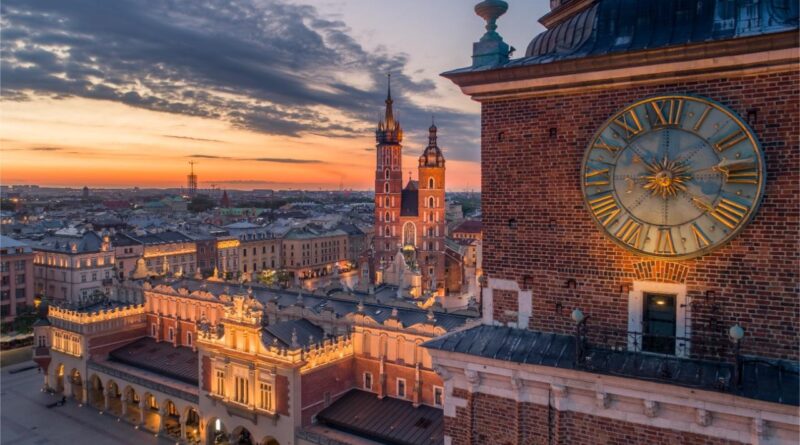
Major cities—such as Warsaw, Kraków, Gdańsk, Wrocław, Poznań, Łódź, and Lublin—will remain key players, but seen through the lens of change: increasingly creative, welcoming, and sustainable cities where art, design, and technology coexist with historical charm.
Alongside urban tourism, experiential travel will be promoted to experience Poland firsthand: from outdoor adventures in national parks to culinary journeys. We spoke about this with Barbara Minczewa, Director for Italy at the Polish Tourism Organization.
What are you proposing for slow and sustainable tourism next year?
Sustainable tourism is now one of the most important pillars of Poland’s promotion strategy. The country is strongly investing in a travel model that values nature, local communities, and the time for discovery. Cycling tourism is a rapidly growing segment, supported by an increasingly extensive and well-organized infrastructure network. Poland is crossed by four major EuroVelo international routes (the European cycling paths that connect the continent from north to south and east to west).
Alongside these European routes, each Polish region is developing local projects that allow travelers to explore the country in a sustainable and immersive way. Among the most popular is Velo Małopolska, a network of over 1,000 kilometers of perfectly marked trails that cross the landscapes of this region, connecting Kraków to the Tatra Mountains, medieval castles, and southern lakes. Along the way, travelers encounter protected natural areas, historic villages, vineyards, and scenic viewpoints equipped for cycling tourism.
But slow tourism in Poland is not limited to two wheels. The country boasts 23 National Parks (including Bieszczady, Białowieża, Tatra) and thousands of kilometers of nature trails, such as those in Białowieża National Park or the Bieszczady Mountains, river excursions, and experiences linked to local gastronomy and zero-kilometer products—all part of an offer increasingly geared toward sustainability-conscious travelers.

What attractions lie beyond the major cities?
Beyond the most famous destinations, Poland hides a mosaic of surprising and still little-known places. There’s the Lublin region, enchanting with its multicultural soul and villages immersed in greenery; Lower Silesia, where mountains, mines, and ancient palaces reveal the history of Central Europe; or Warmia-Masuria, with its sparkling lakes and endless forests. Even the regions near major cities prove particularly rich in attractions and charm: notably Małopolska (whose capital is Kraków), with its mountainous landscape, conceals both natural and cultural treasures, including magnificent wooden churches, a UNESCO heritage site; Pomerania is not just Gdańsk, but also dense forests, lakes, and cycling paths along the Baltic Sea—moreover, it is Poland’s most advanced region for sustainable and regenerative tourism.
What about niche tourism?
Poland today is a multifaceted destination, able to satisfy diverse interests. Food and wine tourism is among the fastest-growing segments: the Michelin Guide has recently expanded Poland’s presence to five regions, consecrating the country’s haute cuisine among the most interesting in Europe.
Alongside fine dining, local traditions remain strong: taverns, markets, and small restaurants where visitors can discover authentic flavors and zero-kilometer products.
Wellness and spa tourism, thanks to numerous natural springs, continues to grow, as does historical and cultural tourism, with itineraries dedicated to memory, castles, and UNESCO sites. Unique experiences also abound, such as astrotourism (for example, in the Bieszczady Mountains, one of Europe’s least light-polluted areas). Many also visit Poland for birdwatching or to see rare animals up close, such as the European bison, which lives only here and can be encountered in the wild.
Are there musical events or anniversaries you will celebrate in 2026?
Poland is a country of great musical tradition (Chopin, Penderecki, etc.), an integral part of its soul. 2026 will be rich in events dedicated to Fryderyk Chopin, with concerts, exhibitions, and initiatives. In Warsaw, for example, numerous free outdoor Chopin concerts are held every year in Łazienki Royal Park during spring and summer.

One of the world’s most prestigious events is the International Fryderyk Chopin Piano Competition, held every four years. In 2026, the winners and finalists of the competition will embark on an official tour in Poland, with recitals and orchestral concerts scheduled through August, visiting cities such as Warsaw, Kraków, Gdańsk, and Wrocław.
Are there other festivals or internationally renowned events?
Poland hosts a vibrant and dynamic cultural scene. From Gdańsk with the famous Soundrive Festival, dedicated to new musical trends, to Katowice—UNESCO City of Music—with a continuous calendar of events from jazz to rock, and Kraków—one of Europe’s cultural capitals—with events such as the Jewish Culture Festival and the Film Music Festival, among the most important of its kind worldwide.
There’s also Misteria Paschalia (Kraków – March 30/April 5, 2026), Poland’s leading early music festival held during Holy Week in Kraków’s historic venues. From late March to mid-April, Warsaw hosts the Ludwig van Beethoven Easter Festival. The 2026 edition marks the festival’s 30th anniversary. Among the announced titles is Fidelio at the National Theatre on March 22, 2026 (Moniuszko Hall). In late August and early September, the Chopin and His Contemporaries Festival will be organized by the Chopin Institute. Also in September, Wratislavia Cantans will take place between Wrocław and Lower Silesia—one of Europe’s most important vocal-symphonic festivals.
As for contemporary music, autumn in Warsaw brings Warsaw Autumn / Warszawska Jesień, and also Eufonie – International Festival of Central-Eastern European Music, a showcase that connects repertoires from Central and Eastern Europe.
Finally, the seasons of the Warsaw National Philharmonic and major theaters (Teatr Wielki – Opera Narodowa, NFM Wrocław) include tours and symphonic projects linked to these festivals.
Are there any new museums or cultural spaces opening?
The MSN – Museum of Modern Art in Warsaw has a new location on Plac Defilad, inaugurated in 2024, and is now a landmark for contemporary art. In 2026, the Warsaw Ghetto Museum will open in the historic building of the Bersohn and Bauman Hospital (11,500 m² of permanent exhibitions and educational projects).
The Museum of the Greater Poland Uprising (Muzeum Powstania Wielkopolskiego 1918–1919) in Poznań will have a new museum complex on Wzgórze św. Wojciecha, scheduled for completion in December 2026.
In the second half of 2026, a new memorial building with a permanent exhibition will open for the KL Plaszow Museum – Memorial in Kraków, an internationally significant remembrance site.
Among the novelties is Metroteka – an “express library,” an innovative 150 m² space with 16,000 volumes, reading areas, and services, opened this year in Warsaw’s M2 metro line at Kondratowicza station. Finally, this year saw the opening of the Auschwitz Center on Hate, Extremism and Radicalization (Oświęcim), a research center housed in the historic home of Rudolf Höss.
What are your main objectives for participating in BIT?
Poland’s participation in BIT 2026 takes place in a context of strong dynamism and renewed attention toward the Italian market. The main goal is to present a modern, accessible, and sustainable destination that combines the charm of its traditions with an increasingly experiential and innovative offer.
This year, Poland’s presence at the Milan fair will also have a strong sports focus: visitors will be able to enjoy immersive experiences showcasing Poland’s diverse tourism offer related to sports, snow, and nature—from ski trails in the Tatra Mountains to outdoor activities in the Carpathians and the Masurian Lake District.
There will also be winter sports simulations and networking moments dedicated to active tourism, while the participation of Polish athletes invited by the Ministry of Sport and Tourism will provide a unique opportunity to highlight the authentic link between sport, territory, and hospitality.
Poland’s key message at BIT is clear: a country that is transforming, enthusiastically opening up to international travelers, and inviting them to live authentic experiences in contact with nature, culture, and people. An invitation to discover a Poland that is more sustainable, dynamic, and vibrant than ever.

Will you have partners at your exhibition stand?
At Poland’s stand, there will be representatives of several co-exhibitors who actively contribute to promoting the destination in the Italian market.
This joint participation is a concrete sign of the willingness to work in synergy, presenting an integrated and high-quality tourism offer. The goal is to strengthen existing partnerships and start new collaborations with Italian operators interested in offering increasingly diversified itineraries and products.
How important is the Italian market for Polish tourism?
Italy has always been one of the most important markets for Poland, with a steady flow of arrivals and growing interest in experiences beyond traditional circuits.
2025 was an extraordinary year for Italian tourism to Poland: the results recorded were the highest ever, with numbers surpassing all previous records in terms of arrivals and overnight stays. In the first six months of the year, Italy confirmed itself as the fastest-growing foreign market, with a percentage increase higher not only than neighboring countries (226,000 Italians chose Poland) but also than traditionally strong markets such as the UK, USA, and France.
The combination of good air connectivity, a wide variety of tourism products, and excellent value for money is making Poland an increasingly appreciated destination for both individual and organized travel.
Art cities such as Kraków, Warsaw, and Gdańsk continue to attract a broad audience, but interest is rapidly growing for lesser-known regions such as Podlachia, Lower Silesia, or the Lublin region, where Italian travelers discover the most authentic and sustainable Poland.
Looking ahead to 2026, the goal is to consolidate this positive trend, strengthen ties with the Italian trade, and expand the perception of Poland as a destination suitable for all seasons and every type of traveler.
Air and Rail Connections
In 2025, air connections increased by one-third, and today the country is easily accessible thanks to numerous direct flights operated by airlines such as LOT Polish Airlines, Ryanair, and Wizz Air, connecting major Italian cities—Rome, Milan, Venice, Bologna, Naples, and Catania—with Warsaw, Kraków, Gdańsk, Wrocław, Poznań, Katowice, and Lublin.
From March 30, 2026, LOT Polish Airlines will connect Kraków and Rome with new direct flights, and for next summer, the national carrier has announced a new route between Bologna and Warsaw (starting March 31, 2026), further expanding the network of connections between Poland and Italy.
An expanding network that makes Poland an ideal destination even for short stays and city breaks.
If you had to invite Italian operators to consider Poland as a tourist destination, what would you say?
We invite Italian tour operators to look at Poland with fresh eyes.
Not just as a destination to visit, but as an experience to live: a place where history meets modernity, where hospitality is authentic, and where every season offers different emotions.
The image we would like to leave in the hearts of Italian travelers is that of a Poland in constant evolution, vibrant and creative cities, landscapes that regenerate, and unique flavors.
Photo Credits Polish Tourism Organisation
Lodz photos, credits lodz.travel