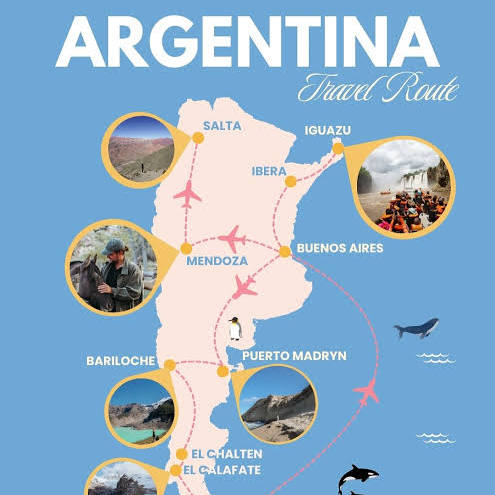
By Dalton Zahir : To plan an unforgettable trip to Argentina, you must navigate its immense geographic diversity, which stretches nearly 3,700 kilometres from subtropical rainforests to subpolar glaciers.
From the neon-lit milongas of Buenos Aires to the cracking blue ice of southern Patagonia, Argentina does not do subtlety. It is a country built on an impossible scale. Stretching nearly 3,700 kilometres from the subtropical edge of Brazil to the subpolar tip of Tierra del Fuego, it commands a landscape of dramatic extremes.
For the first-time traveller, navigating this giant can feel overwhelming. Yet, with a strategic fortnightly itinerary, it is possible to catch the country’s rhythm—a cadence that moves between urban elegance, thunderous waters, and silent, sweeping wilderness.
The Parisian Heartbeat
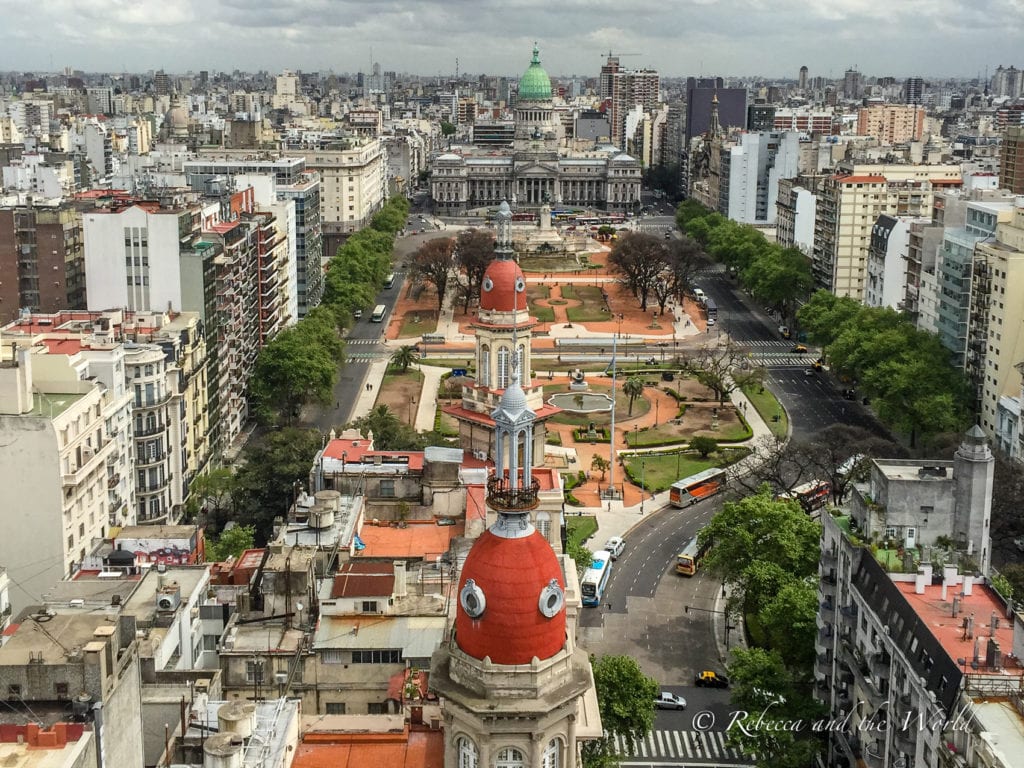
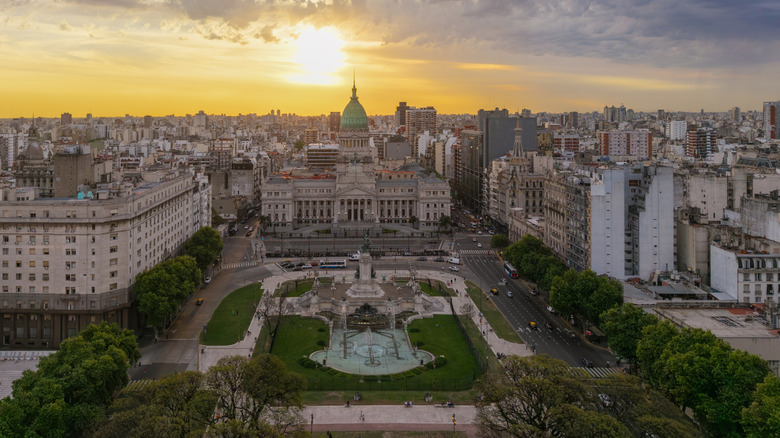
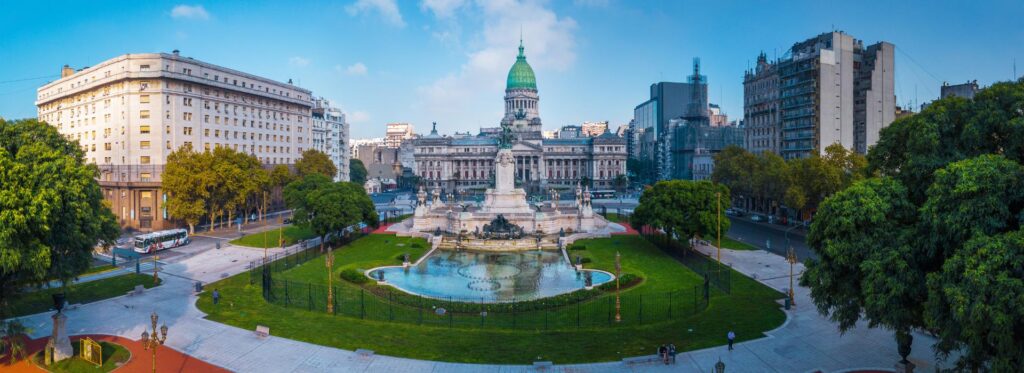
The journey inevitably begins in Buenos Aires, a city that behaves like a European capital misplaced in South America. In the historic quarter of San Telmo, cobblestone streets echo with the melancholic scrape of accordions as street dancers slice through the tango. A short walk away, the pastel-colored tin houses of La Boca celebrate a gritty immigrant past, while the upscale avenues of Recoleta feel entirely Parisian.
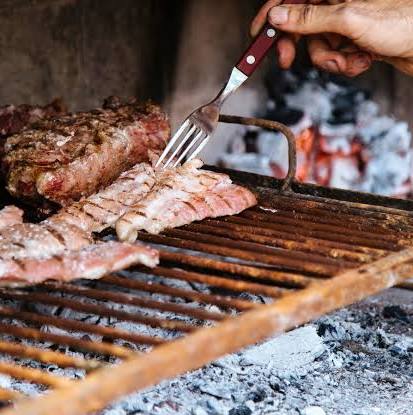
Before leaving the capital, a pilgrimage to a traditional parrilla (steakhouse) is mandatory. Here, the theatre of the asado—slow-roasted, grass-fed beef paired with a deep, plum-heavy Mendoza Malbec—reveals that dining in Argentina is not a meal; it is a secular religion.
Thunder in the Jungle
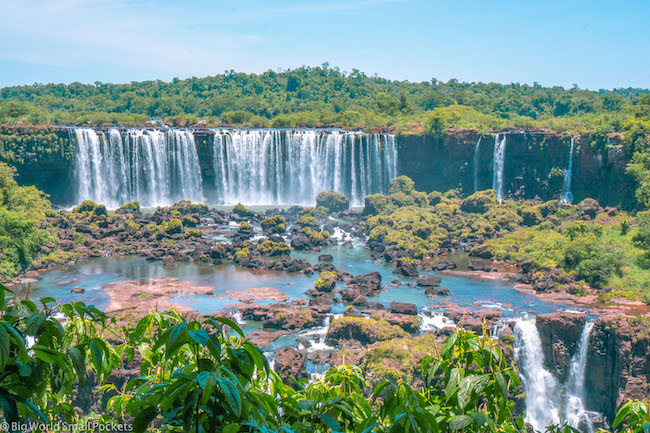
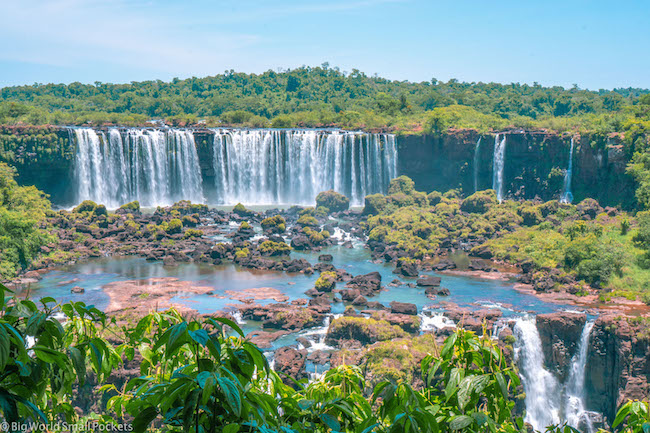
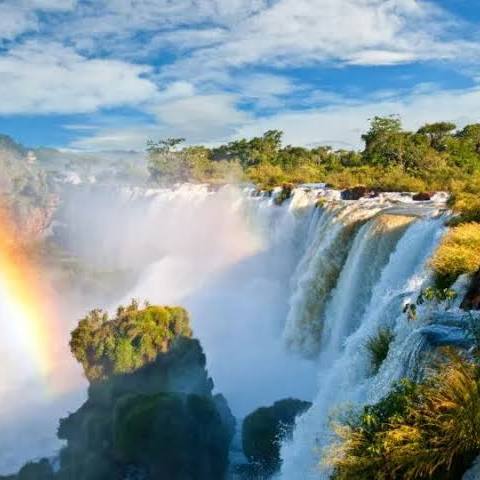
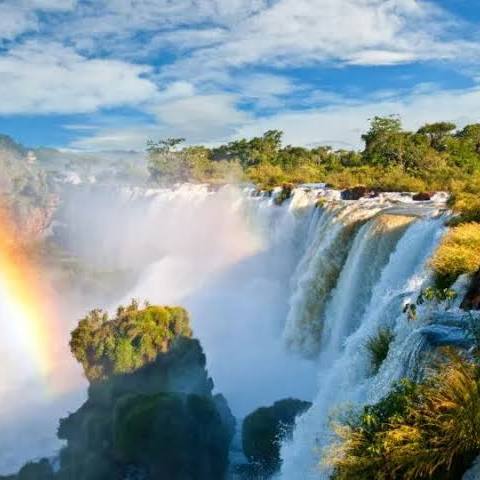
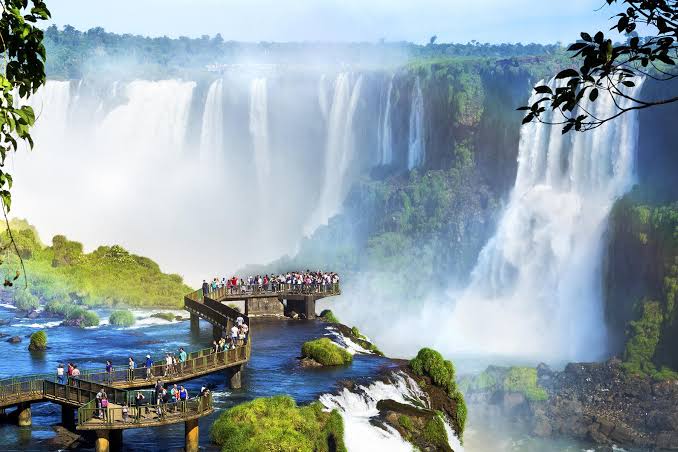
A short two-hour flight north replaces urban concrete with thick, emerald rainforest. On the border with Brazil lies Iguazú Falls, a cataclysmic assembly of 275 individual waterfalls crashing over a volcanic plateau.
Walking the metal boardwalks brings visitors directly over the abyss of the Garganta del Diablo (Devil’s Throat). The sheer volume of water creates a permanent mist that paints rainbows against the canopy. It is a sensory assault of roar, spray, and tropical heat—the ultimate antithesis to the cool city left behind.
The Great Blue Silence
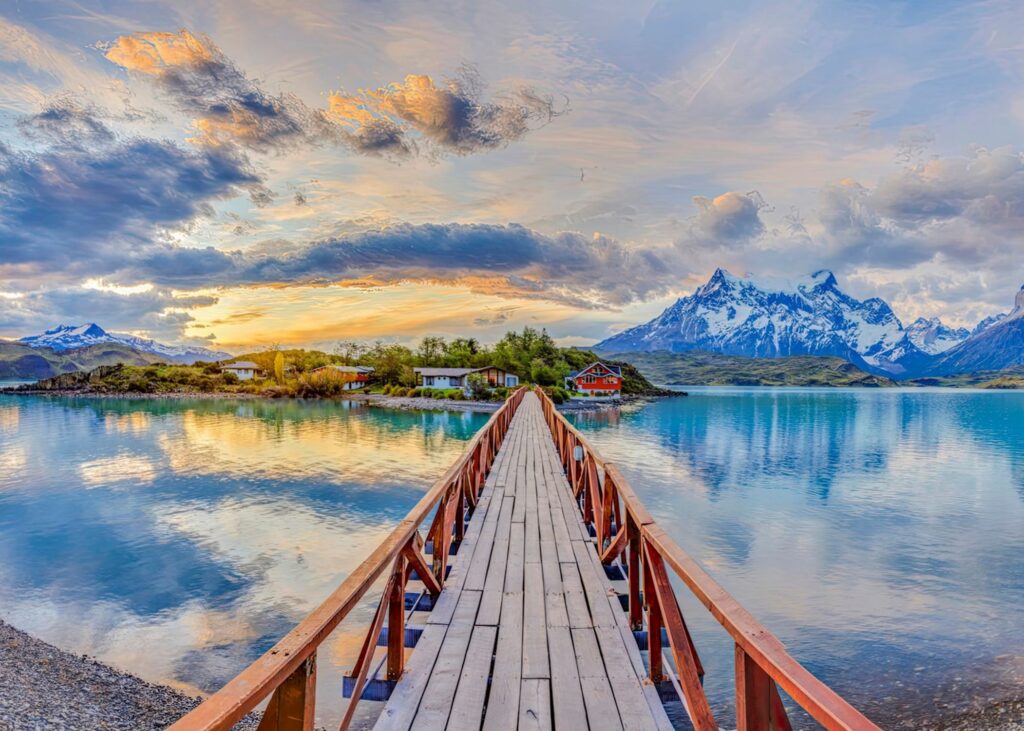
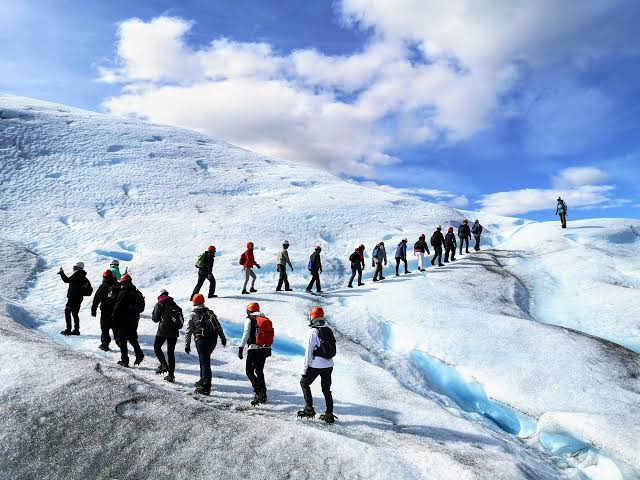
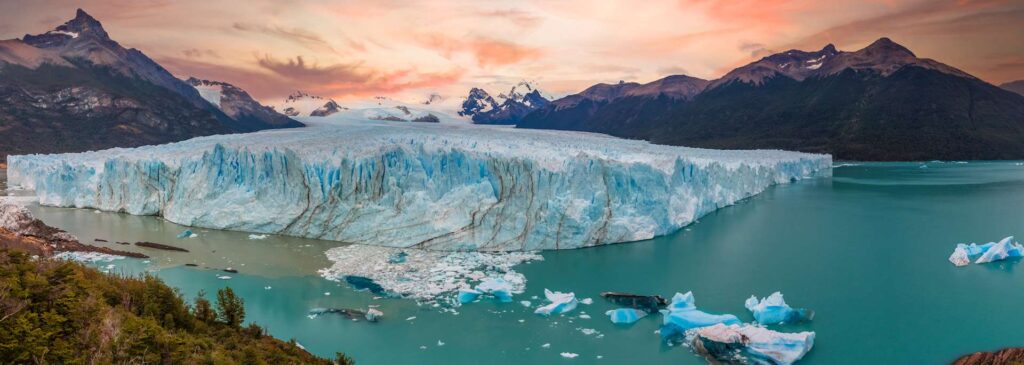
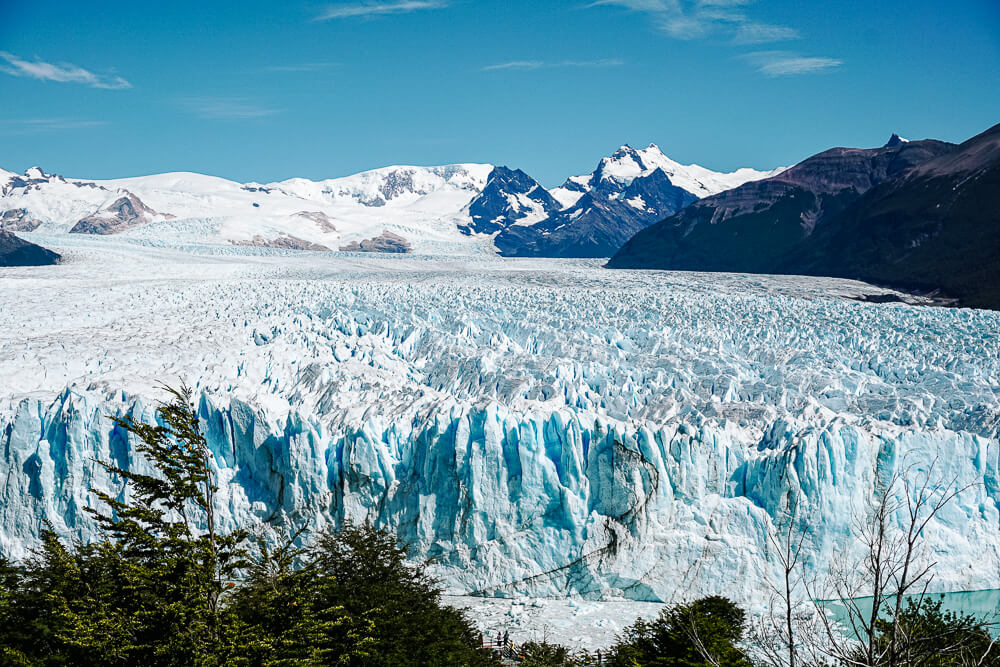
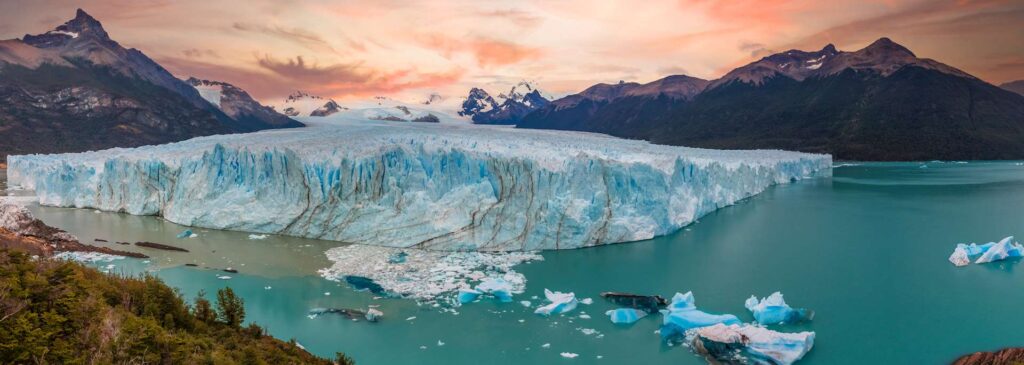
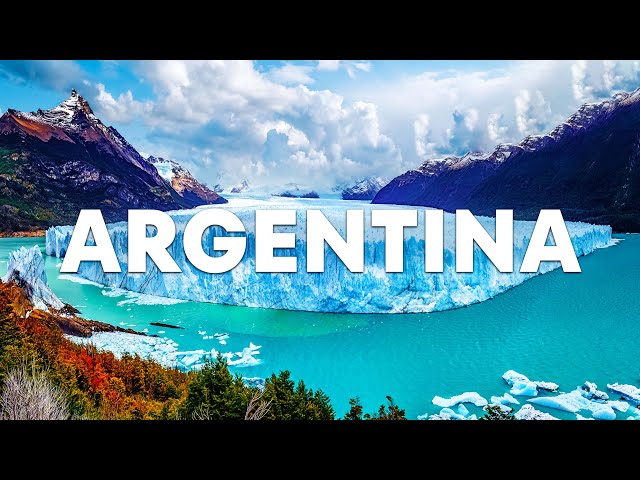
To truly understand Argentina, one must head south into Patagonia. Landing in El Calafate, the air turns crisp, smelling of glacier silt and dry scrub. The crown jewel here is the Perito Moreno Glacier, a towering wall of 250-square-kilometres of sapphire ice.
Unlike most of the world’s glaciers, Perito Moreno is stable, advancing slowly each day. Visitors standing on the viewing platforms are treated to a live performance of nature’s power: deep, gunshot-like cracks echoing across the water just before a skyscraper-sized shard of ice shears off, crashing into Lake Argentino below.
Peaks of the Frontier
A three-hour drive north along the legendary Route 40 leads to El Chaltén, a frontier outpost known as Argentina’s trekking capital. Here, civilization ends and the wild begins.
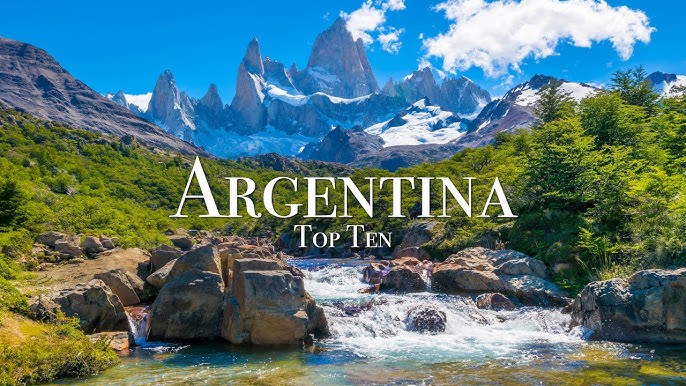
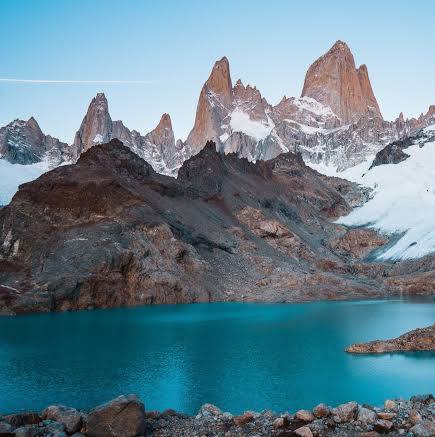
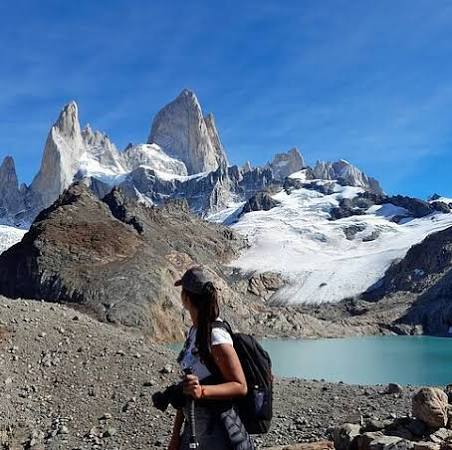
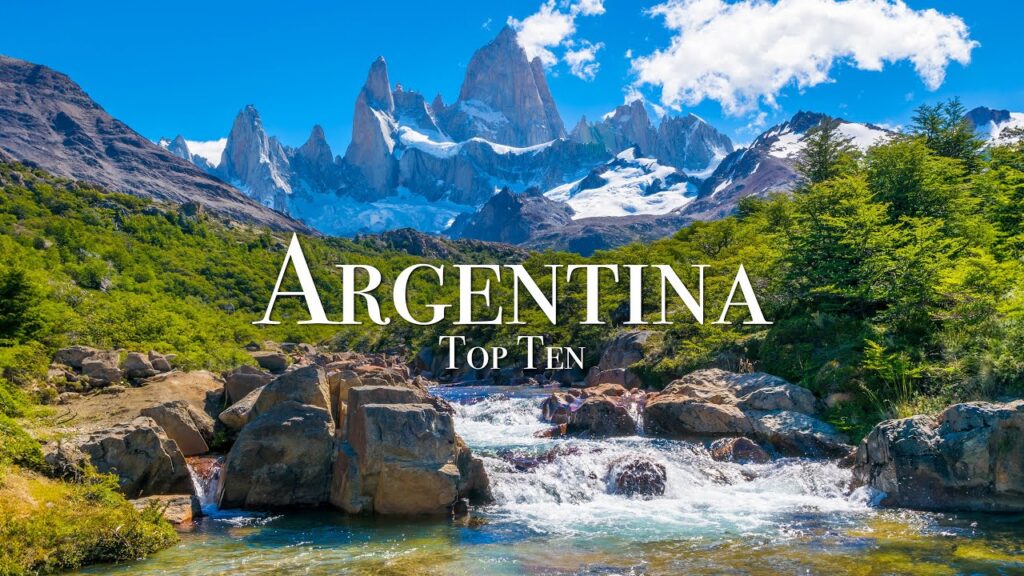
The town serves as a basecamp for the iconic trek to Laguna de los Tres. The trail winds through golden lenga forests and steep moraines, culminating in a jaw-dropping view of Mount Fitz Roy’s granite spires piercing the sky. It is a challenging trek, but standing at the base of these monoliths feels like standing at the very edge of the known world.
Alpine Serenade
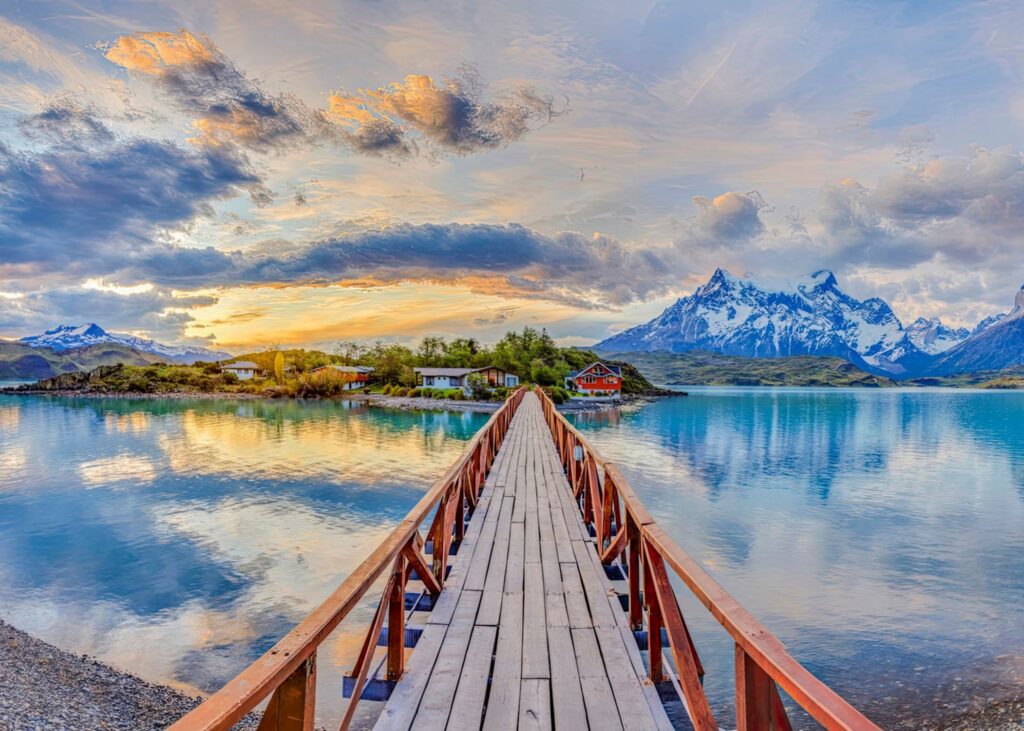
The final chapter unfolds in San Carlos de Bariloche, nestled in the northern Lake District. Surrounded by snow-capped peaks and the deep blue of Nahuel Huapi Lake, Bariloche looks and feels like a Swiss alpine village, complete with artisanal chocolate shops and microbreweries.
Driving the famous Circuito Chico coastal road offers panoramic views of glacial lakes and ancient forests. It provides a peaceful, reflective finale to a journey defined by immense scale and raw beauty.
Argentina challenges the traveler to embrace long distances and sharp contrasts. But for those willing to chase the horizon from the jungle to the ice, the reward is a lifetime of wonder.
TRAVEL BRIEF: Plan Your Trip
When to Go: The shoulder seasons of Spring (September–November) and Autumn (March–May) offer the best balance of pleasant weather nationwide.
Getting Around: Due to vast distances, book domestic flights well in advance via Aerolíneas Argentinas.
Local Tip: Always keep some cash (pesos) on hand for tips at steakhouses and small mountain refuges.
Option 1: The Culinary Focus
FIRE, FLAVOUR, AND FLOODED GLASSES: A Culinary Pilgrimage Through Argentina
“The Theatre of the Asado: Grass-fed Argentine beef is slow-cooked over wood embers, a timeless national tradition that pairs perfectly with a deep Mendoza Malbec.”
To understand Argentina, you must understand the asado. It is not merely a barbecue; it is a secular religion, a cross-generational ritual, and the undisputed heartbeat of Argentine culture. From the sophisticated dining rooms of Buenos Aires to the sun-drenched vineyards of Mendoza, the country’s identity is forged in fire and poured into a glass.
The culinary journey kicks off in Buenos Aires, a metropolis heavily shaped by late 19th-century European immigration. The result is a unique gastronomic hybrid. In neighborhoods like Palermo, traditional parrillas (steakhouses) sit alongside cutting-edge bistros. Here, master asadores (grill masters) slow-cook grass-fed bife de de lomo (tenderloin) and ojo de bife (ribeye) over wood coals, serving them with nothing more than coarse salt and a vibrant, garlicky chimichurri.
But the capital’s food scene extends far beyond beef. The Italian legacy is alive in every corner, evident in the city’s obsession with handmade fugazzeta (stuffed, cheesy onion pizza) and creamy, artisanal gelato that rivals anything found in Rome.
To pair with these rich flavors, food lovers must head west to Mendoza, the high-altitude oasis tucked against the formidable wall of the Andes. Mendoza is the global capital of Malbec. The region’s desert climate, intense sunlight, and pure mountain meltwater produce grapes with unparalleled depth and velvety tannins. Cycling through the vineyards of the Uco Valley, stopping for multi-course, wine-paired lunches under the shadow of snow-capped peaks, is a sensory experience unmatched anywhere else on the continent.
The journey takes a final, sweet turn in San Carlos de Bariloche, located in the northern Patagonian Lake District. Settled by Swiss and German immigrants, this alpine town has earned a global reputation for its artisanal chocolate. The main avenue, Calle Mitre, smells permanently of roasted cacao and melting sugar.
From the first sizzle of the grill in Buenos Aires to the last handmade praline in Patagonia, Argentina proves that the best way to experience its vast geography is one bite at a time.
SIDEBAR: The Flavour Guide
The Must-Eat Dish:Cordero Patagónico (Patagonian Lamb). Slow-roasted whole on a cross over open wood fires for up to seven hours until the meat is meltingly tender.
The Sweet Fix:Alfajores. Traditional sandwich cookies filled with rich dulce de leche and dipped in dark chocolate or dusted with powdered sugar.
The Daily Ritual:Mate. A bitter, caffeinated herbal tea drank from a hollowed gourd through a metal straw (bombilla), shared socially among friends.
Option 2: The Luxury Travel Focus
THE PRIVILEGED HORIZON: Experiencing Argentina’s Untamed Landscapes in Absolute Luxury
Argentina has long captivated travelers with its raw, frontier geographies, but a new wave of ultra-luxury lodges and bespoke experiences is proving that rugged wilderness does not require rugged living. Today, discerning travelers can chase the edge of the earth without ever compromising on world-class comfort.
The journey begins with an exclusive immersion into the cultural elegance of Buenos Aires. In the aristocratic neighborhood of Recoleta, Belle Époque palaces have been transformed into magnificent grand hotels. Private curators guide guests through hidden art collections, while elite tango masters offer private, in-suite lessons before chauffeured transfers whisk guests away to VIP tables at the city’s most exclusive nightspots.
From the capital, a private charter flies north to the Iberá Wetlands, a pristine conservation miracle. Here, hidden deep within the marshlands, luxury eco-lodges offer an intimate communion with nature. Guests explore the water channels via private solar-powered boats, spotting wild capybaras and caimans before returning to lakeside wooden decks for sundowners and fine dining beneath a canopy of stars.
The ultimate contrast awaits in the far south of Patagonia. Nestled on the shores of Lake Argentino near the Perito Moreno Glacier, exclusive wilderness lodges feature floor-to-ceiling glass walls that frame the dramatic, icy landscape. After a private, crowd-free morning boat cruise directly to the towering walls of the glacier, travelers return to their retreats to thaw out in outdoor heated infinity pools, glass of award-winning wine in hand.
The expedition concludes in Mendoza’s Uco Valley, where avant-garde design hotels are built directly into the vineyards. Guests can wake up to uninterrupted views of the Andes, enjoy bespoke vinotherapy spa treatments, and blend their own custom barrels of Malbec alongside world-renowned winemakers. In Argentina, luxury is not about shutting the wilderness out—it is about creating the perfect frame to take it all in.
SIDEBAR: The Elite Directory
Where to Stay:Llao Llao Resort & Golf-Spa (Bariloche). A legendary historic property offering majestic alpine views, a private golf course, and old-world grandeur.
The Ultimate Splurge: A private heli-skiing excursion over the untouched powder peaks of the high Andes Mountains.
Bespoke Transport: Avoid commercial airport lines by booking private turbo-prop transfers between remote Patagonian lodges.
Option 3: The Budget Backpacking Focus
HIGH ADVENTURE, LOW COST: Hitching, Hiking, and Couch-Hopping Across Argentina
For the budget traveler, Argentina is a thrilling puzzle. It is a massive country where distances are long and flights can quickly drain a wallet. Yet, with a bit of flexibility, a love for the open road, and a willingness to travel slowly, it offers one of the most rewarding backpacking adventures on the planet.
The journey starts in the budget-friendly hostels of Buenos Aires. To save money, smart backpackers skip the expensive, commercial tango shows and head instead to the milongas populares—local neighborhood dance halls where entry costs less than a cup of coffee and the atmosphere is entirely authentic. Street food, like a sizzling choripán (chorizo sausage sandwich) grabbed from a riverside cart, keeps food costs incredibly low.
To conquer the massive distances without breaking the bank, backpackers rely on Argentina’s highly efficient long-distance sleeper buses (colectivos). These double-decker giants feature seats that recline fully into beds, allowing travelers to save on a night’s accommodation while moving between regions overnight.
The ultimate playground for the budget traveler is El Chaltén, the official trekking capital of Patagonia. Unlike most world-class outdoor destinations, access to Los Glaciares National Park here is entirely free. There are no expensive park entry fees, and the network of pristine mountain trails is meticulously marked. Backpackers can pitch a tent at designated free wilderness campsites, drink pristine water straight from glacial streams, and watch the sunrise illuminate the granite spires of Mount Fitz Roy without spending a single peso.
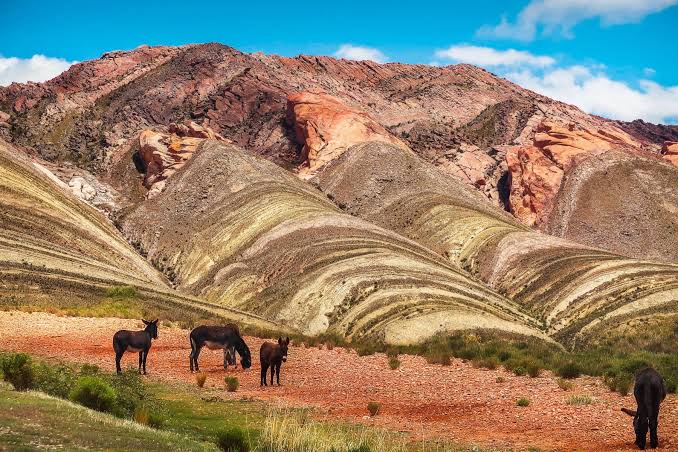
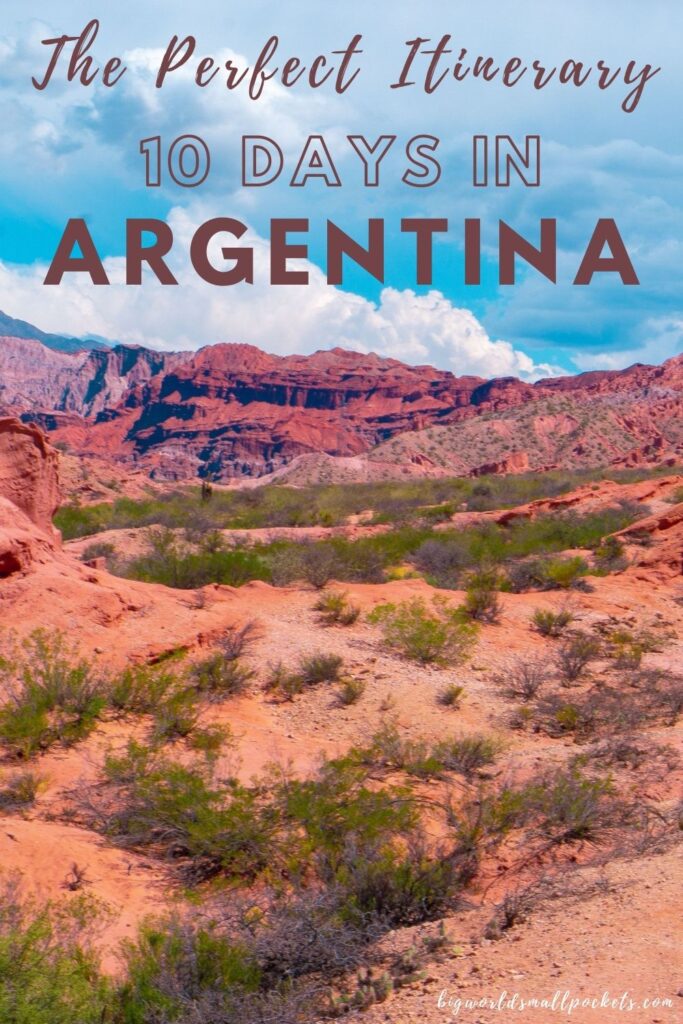
Further north, the arid landscapes of Salta and the Quebrada de Humahuaca offer affordable culture. Backpackers often team up in hostels to split the cost of a budget car rental, driving through multi-colored canyons and staying in tiny Andean villages where hospitality is warm and prices are a fraction of those in the big cities. In Argentina, a tight budget doesn’t limit your experience—it forces you closer to the dirt, the culture, and the adventure.
SIDEBAR: The Backpacker’s Toolkit
Money Saver: Use overnight buses (Cama or Súper Cama class) for long distances to eliminate the cost of a hostel hostel night.
App to Download:Subte app for Buenos Aires. The city’s subway system is incredibly cheap, fast, and easy to navigate.
Accommodation Tip: Look for Refugios (mountain huts) in Bariloche and El Bolsón for cheap, social, and scenic alpine lodging.
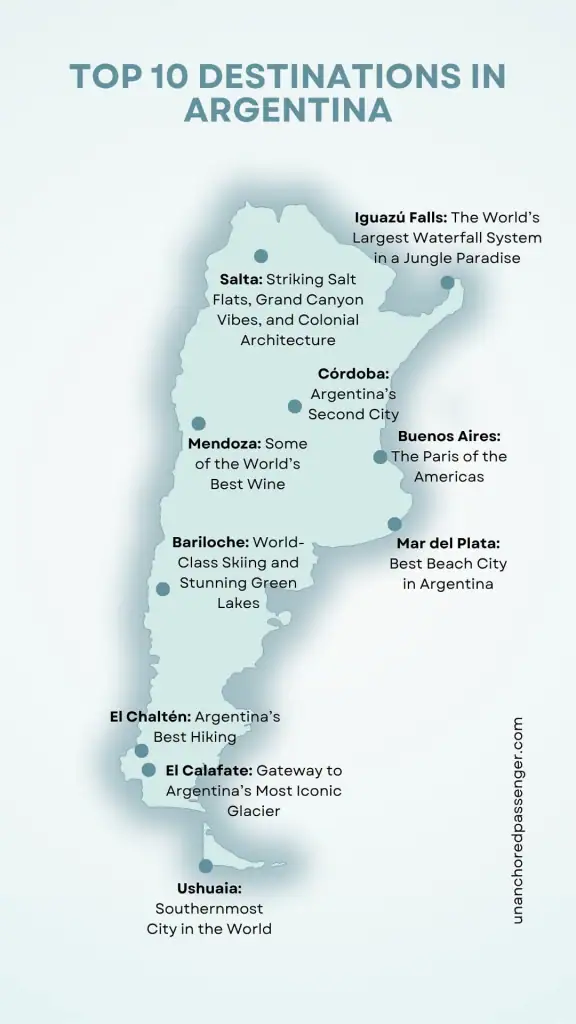
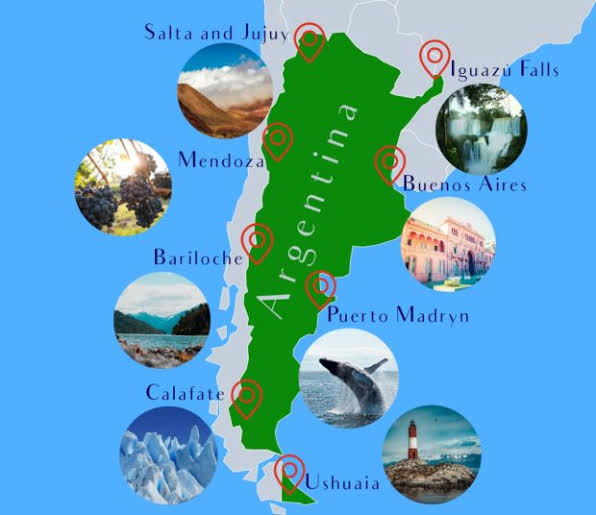
Top 10 Destinations & Best Times to Visit
1. Buenos Aires (The Capital)
Where: Central-east coast.
When: March–May or September–November for mild weather. Avoid January’s extreme heat.
Why: Cosmopolitan city known for tango shows, historic Recoleta Cemetery, and vibrant neighborhoods like Palermo and La Boca.
2. Iguazú Falls
Where: Subtropical northeast border.
When: April–May or August–October to avoid heavy summer rains and extreme heat.
Why: A breathtaking natural wonder consisting of 275 individual waterfalls, featuring the massive Garganta del Diablo (Devil’s Throat).
3. El Calafate (Perito Moreno Glacier)
Where: Southern Patagonian ice field.
When: December–February (summer) for long, sunny days and trekking access.
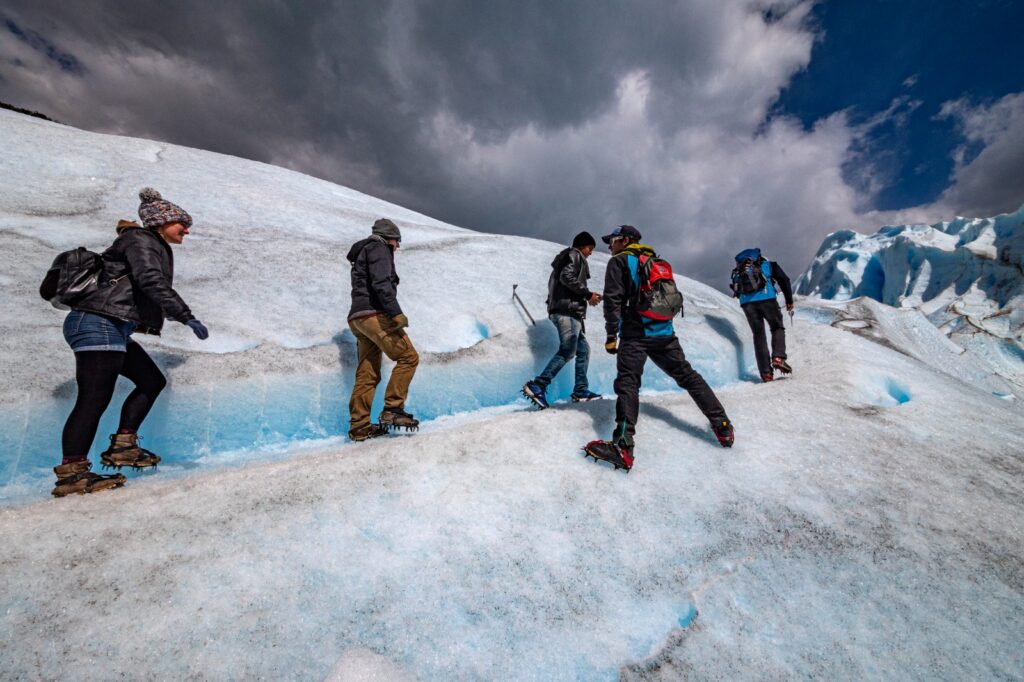
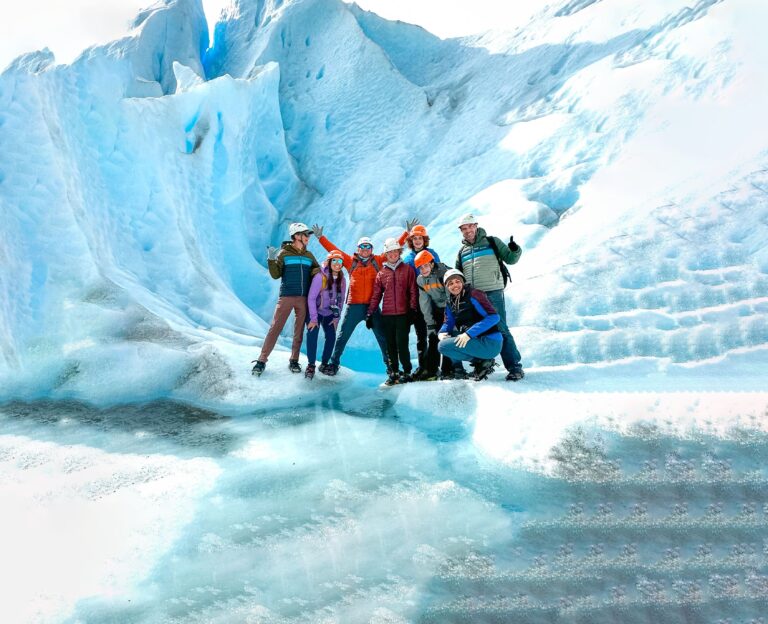
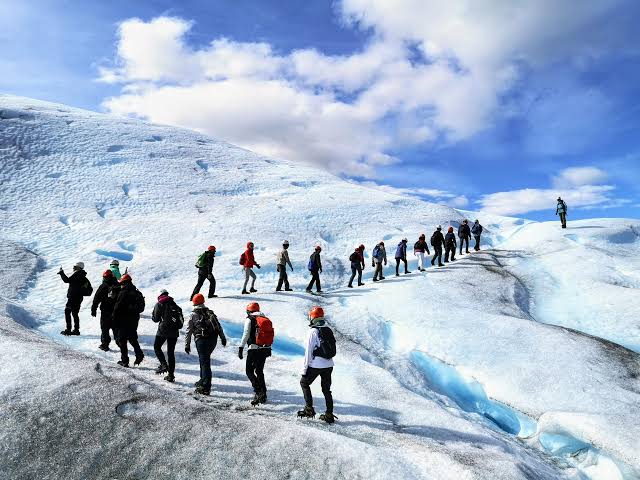
Why: Home to the iconic Perito Moreno Glacier, where you can walk along boardwalks or strap on crampons for ice-trekking.
4. Mendoza Wine Region
Where: Foothills of the Andes Mountains in the west.
When: March–April during the gorgeous grape harvest festival (Vendimia).
Why: The undisputed capital of Malbec wine, offering exceptional vineyard bike tours, tastings, and views of Mount Aconcagua.
5. San Carlos de Bariloche
Where: Northern Patagonia Lake District.
When: November–March for lakeside hiking; July–August for premier South American snow skiing.
Why: Famous for Swiss-style architecture, artisanal chocolate shops, and the beautiful Seven Lakes Route.
6. El Chaltén
Where: Southern Patagonia, near El Calafate.
When: December–February when all mountain hiking trails are completely clear of snow.
Why: Argentina’s official trekking capital, serving as the base camp for world-class hikes to Mount Fitz Roy and Laguna de los Tres.
7. Salta & the Northwest (Quebrada de Humahuaca)
Where: Arid Andean northwest.
When: April–November (winter/shoulder months) to enjoy dry days and completely avoid summer flash floods.
Why: Showcases multi-colored desert landscapes, colonial architecture, and the Salinas Grandes salt flats.
8. Ushuaia (The End of the World)
Where: Tierra del Fuego, the southernmost tip of the continent.
When: December–March for manageable subpolar weather and boat navigation.
Why: The gateway to Antarctica, featuring cruises through the Beagle Channel and hikes in Tierra del Fuego National Park.
9. Península Valdés
Where: Atlantic Patagonian coast.
When: September–November for peak marine wildlife activity.
Why: A UNESCO site world-renowned for viewing Southern Right Whales, elephant seals, and massive Magellanic penguin colonies.
10. Esteros del Iberá
Where: Northeastern wetlands.
When: March–May or September–November to escape severe summer heat and mosquitoes.
Why: The world’s second-largest marshland system, pristine for spotting wild capybaras, caimans, and hundreds of bird species.
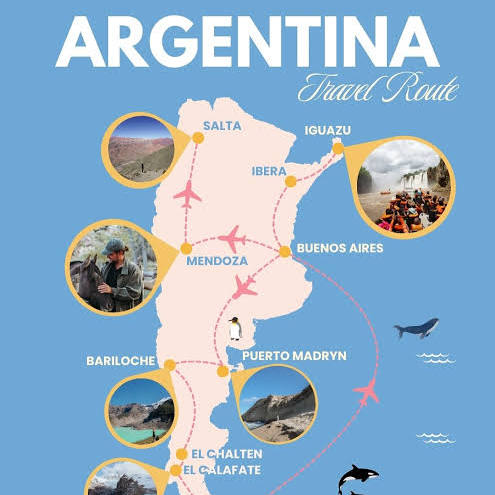
The Ultimate 2-Week “Highlights of Argentina” Itinerary
This classic first-timer route relies on short domestic flights to maximize your time. [Buenos Aires] ✈ [Iguazú Falls] ✈ [El Calafate] ✈ [Bariloche] ✈ [Buenos Aires]
Days 1–3: Cultural Immersion in Buenos Aires
Day 1: Land at Ezeiza International Airport (EZE). Explore the historic Plaza de Mayo, Casa Rosada, and the cobblestone streets of San Telmo.
Day 2: Visit the colorful conventillos of La Boca in the morning. Walk through the upscale Recoleta Cemetery and Palermo parks in the afternoon. Attend a traditional evening tango show.
Day 3: Take a relaxing day trip to the river channels of the nearby Tigre Delta, or experience a traditional gaucho day at an estancia in San Antonio de Areco.
Days 4–5: Subtropical Iguazú Falls
Day 4: Fly from Buenos Aires to Puerto Iguazú (IGR). Spend the afternoon exploring the lower and upper walking trails of the Argentine side.
Day 5: Witness the thunderous Devil’s Throat waterfall up close. Take an optional speed-boat ride that drives right under the cascading falls.
Days 6–9: Glaciers & Hiking in Southern Patagonia
Day 6: Fly to El Calafate (FTE) via a connection. Check into your lodge and sample traditional cordero patagónico (Patagonian spit-roasted lamb).
Day 7: Dedicate the day to Los Glaciares National Park. Walk the metallic viewing pathways facing the massive ice walls of the Perito Moreno Glacier.
Day 8: Take a morning shuttle bus north to the mountain town of El Chaltén. Warm up with a short trek to Laguna Capri.
Day 9: Embark on the full-day, iconic trek to the base of Mount Fitz Roy (Laguna de los Tres). Take an evening shuttle bus back to El Calafate.
Days 10–13: Lakes & Mountains in Bariloche
Day 10: Fly from El Calafate to San Carlos de Bariloche (BRC). Stroll through the alpine-style town center and sample local craft chocolates.
Day 11: Rent a car or take a tour to drive the famous Circuito Chico (Short Circuit), stopping at panoramic viewpoints and the historic Llao Llao Hotel.
Day 12: Spend a full day exploring the stunning Seven Lakes Route, driving through the mountain villages of Villa La Angostura and San Martín de los Andes.
Day 13: Take a scenic boat excursion across Nahuel Huapi Lake to the unique Arrayanes Forest.
Day 14: Return to Buenos Aires
Day 14: Fly back to Buenos Aires for any last-minute leather shopping in Palermo or a final steak dinner (asado) before catching your international flight home.
Lucas Martín Soñora Avenida Mapuche S/N, City: Caviahue, State/Province: Neuquén Postal Code (ZIP): 8349, Country: Argentina