
TOURISM IN TIMES OF CHANGE… “BY WARS”
— José Aleixandre Caballero
MARCH 2026 TRAVELERS TIME
I can imagine a large majority of “entrepreneurs and/or decision makers” in Spain’s tourism industry analyzing the consequences of the wars on tourist destinations over the past few days of March… Their dilemma? How to reverse them in favor of their economic interests, thanks to the opportunity provided by the “imposed” political instability in the Middle East, Ukraine, Palestine, and Russia.
Perhaps I’m wrong, but the negative effects generated by the disappearance of tourism are already affecting directly or indirectly more than 19 receiving countries and hundreds of resorts that are today prosperous destinations… Countries with destinations like Israel, Palestine, Azerbaijan, Bahrain, Cyprus, Iraq, Jordan, Kuwait, Lebanon, Oman, Qatar, Saudi Arabia, Syria, Turkey, United Arab Emirates… etc. etc. come to mind. That is, practically the entire Middle East; which, together with the United States, Israel, Palestine, Russia, and Ukraine, shows the magnitude that destabilization has reached in the trade of the tourism industry worldwide.
The gravity of the consequences of the “imposed” wars, both in human lives and material goods, is today incalculable in all economies and businesses, even if we focus on the tourism business. We can’t ignore the problems and losses caused to the countries of origin, which send travelers.
I must confess that, although I am unable to understand and even less accept reasons for the deaths of human beings… I wouldn’t know how to quantify the irreversible economic damage inflicted only on the concept of “tourism income” to each of the affected countries, much less in their global totality… However, I do see “on the other side”… a certain light, although “partial”, for the opportunities that are opening up in favor of other countries receiving tourism, which, like Spain, in all its variants and motivations, will offer alternatives to the sending markets.
Suddenly, millions and millions of dollars “have been thrown into the air” without anyone knowing where they will fall… (I’m afraid that so many expectations will be raised to “collect it” that, looking at the “sky”, many will stumble…)
If tourism was and is an extremely important asset due to its economic contribution, not only to tourism businesses but also to the significant income in the “GDPs” of the budgets of the receiving countries… we will understand the magnitude of the tragedy…
From my humble point of view, the issue is that we had already reached the ceiling in Spain due to its occupations at the limit and seasonal… and now that we are almost full and on the verge of “dying of success”… What do we do, how do we react and manage? How can we digest such an important piece of the pie, now within our reach?
Evidently, the answers will be as varied as they are partisan and self-interested, and whatever is done, I’m afraid it will be uncoordinated and marked by third-party interests… based, of course, on price speculation, making offers more expensive in a greedy way, propitiated by “the speculative situation of the moment”… No… I’m not going to criticize the freedom of prices, that’s what it’s there for… But I do think that if we were already at a structural level of poor quality, and as for service, training, and professionalism, at a minimum… “it’s harsh but true”… we must improve and greatly improve our customer service… the future results may be “fleeting”… and I wonder and question… where is that dreamed-of longing to “attract customers to turn them into our guests, gain a market, and achieve their loyalty as customers”? Was the basis of the content of our intangible offer, was one of the strengths of our products based on the quality of structures, facilities, and services that were differential factors of our offers, making them attractive, not disappointing a posteriori, and often exceeding customer expectations?
Those who think that tourism has no memory are wrong, as much as those who think that it’s okay, it doesn’t matter… we have enough customers… and they still don’t improve… improve, yes!!! in structures, professionalism, human quality… improve in the price-quality ratio… in a word, give satisfaction to the guest customer.
Do we despise considering that the satisfied consumer is a future customer and generator of positive synergies for our business… let’s analyze why?? Now we only have “consumers” and we’ve lost our Guest Customers… Let’s be realistic and face the shortcomings of our industry, let’s become aware and act… tourism is a business, yes, of human beings serving human beings… it depends on us whether they are select or not… of quality or not… it will depend on the prestige gained by the reality contained in our offer, especially in facilities, welcome, comfort, and services provided by trained professionals…
A reflection that, as a consumer, I make is… Do we really know how to behave and act as hosts?… Do we really know the basic rules of welcome and service?… Do we offer the hospitality that satisfies the customer?… Are we prepared to act immediately and diligently to their possible requirements… or do we implicitly accept that we don’t know the fundamentals of the tourism business, and we need to professionalize?
“In times, I had a neighbor in my hometown who had some cows, the demand for milk increased due to its quality… and to meet the demand, he decided to add some water to the product… soon, demand began to fall… worried about his economy, he hired the services of an expert financial team and “revenue manager”… They advised him to reduce costs, produce more, and raise prices according to demand… The man saved on cleaning the stables, veterinary expenses, rationed the cows’ feed, and gave them more water to drink, and raised prices… The first few months, the economic benefits were spectacular… and a little later, the business worsened, the cows lost weight and got sick, produced less milk and of poorer quality… regular customers noticed and stopped buying, he only had occasional passersby, until income was lower than expenses… (The final recommendation of the technicians was… you should sell the cows and dedicate yourself to hospitality).
I have a great curiosity to see the short-term behavior of the tourism sectors that, a priori, should be interested in catalyzing the new opportunities.

José Aleixandre Caballero
Director Consultant of technical companies and tourism businesses.
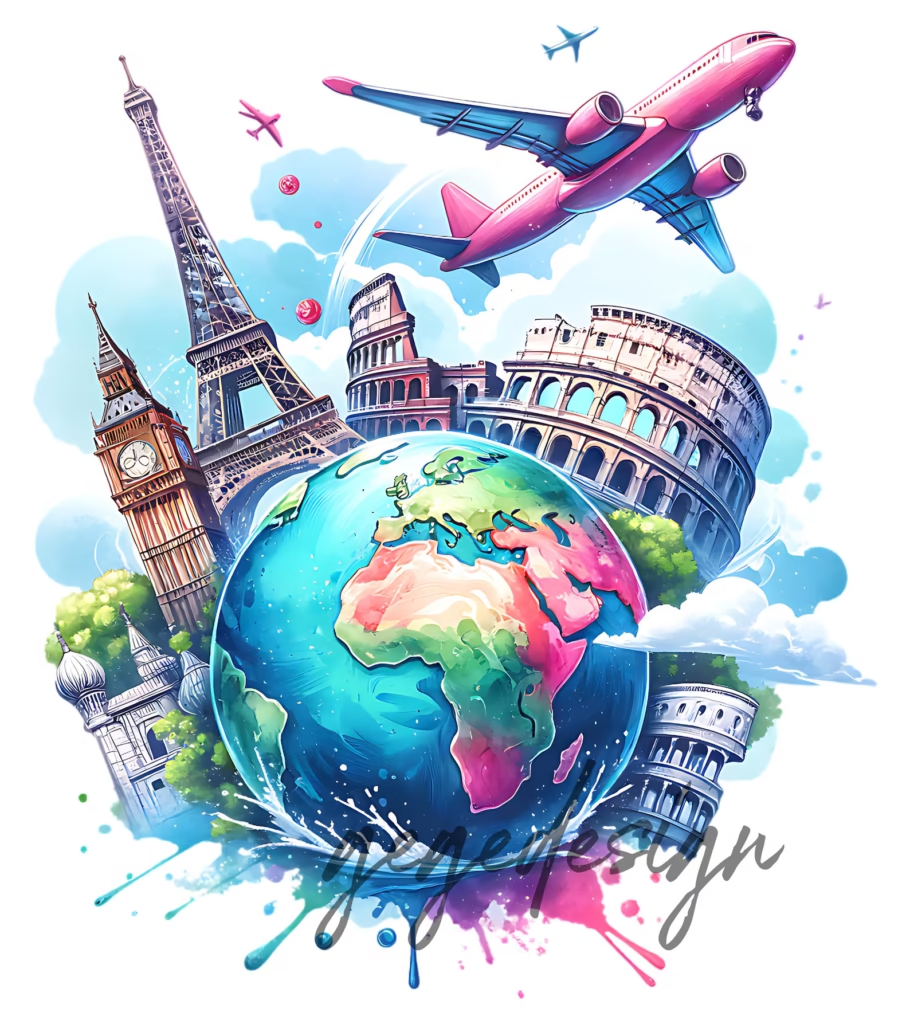
Designing a template for Tourism in Times of Change involves creating a framework that addresses modern challenges like climate change, digital transformation, and shifting traveler behaviors. A successful design should be resilient, sustainable, and adaptable to rapid global shifts.
1. Strategic Template Structure
To effectively manage tourism development in a changing landscape, use a “Theory of Change” approach. Your template should include these core sections:
- Resilience & Crisis Management: Dedicated space for risk assessment and strategies to handle future crises or extreme weather events.
- Sustainability Pillars: Sections for environmental protection, socioeconomic impact, and cultural preservation.
- Adaptive Governance: A framework for involving local communities and multiple stakeholders in decision-making.
- Digital Innovation: Placeholders for technological solutions, such as data analytics for monitoring climate impact or digital marketing tools.
2. Design Thinking Principles
Incorporate design thinking to ensure the template remains human-centric and responsive to change:
- Co-creation: Include modules for stakeholder workshops and community feedback loops.
- Prototyping: Allow for “out-of-equilibrium” experimentation where new tourism products can be tested and adjusted quickly.
- Accessibility: Ensure the design covers physical and digital accessibility for diverse traveler groups.
3. Practical Tools & Platforms
Depending on your specific needs, you can adapt these existing formats:
- Itinerary & Planning: Use the Canva Travel Itinerary Builder for visual, easily modifiable trip plans that include hyperlinks and placeholders for maps.
- Professional Presentations: Platforms like Slidesgo and PowerPoint offer “Tourism Strategy” and “Sustainable Travel” themes ready for customization.
- Project Management: Notion Travel Templates can be used to organize complex development data, packing lists, and visa requirements in one workspace.
- Marketing & Ads: For promotional materials, PosterMyWall provides templates focused on environmental tourism and World Tourism Day celebrations.
4. Key Metrics for the “New” Tourism
Include a section in your template to track these evolving indicators:
- Carbon Footprint: Measuring the environmental cost of visitors.
- Community Wellbeing: Shifting focus from just “tourist numbers” to local benefit.
- Diversification Index: How well the destination has diversified its offerings to remain resilient.
M.Z.I. Dalton Zahir | TravellerTimes Desk
Querido Don Pepe.
Tanto he aprendido de ti en el pasado!
Continuas enseñándome.
Gracias desde Buenos Aires !!!
IF YOU WISH TO DO WRITE AN ARTICALE FEATURE PLS DO AND SEND TRAVELLERTIMESINFO@GMAIL.COM