
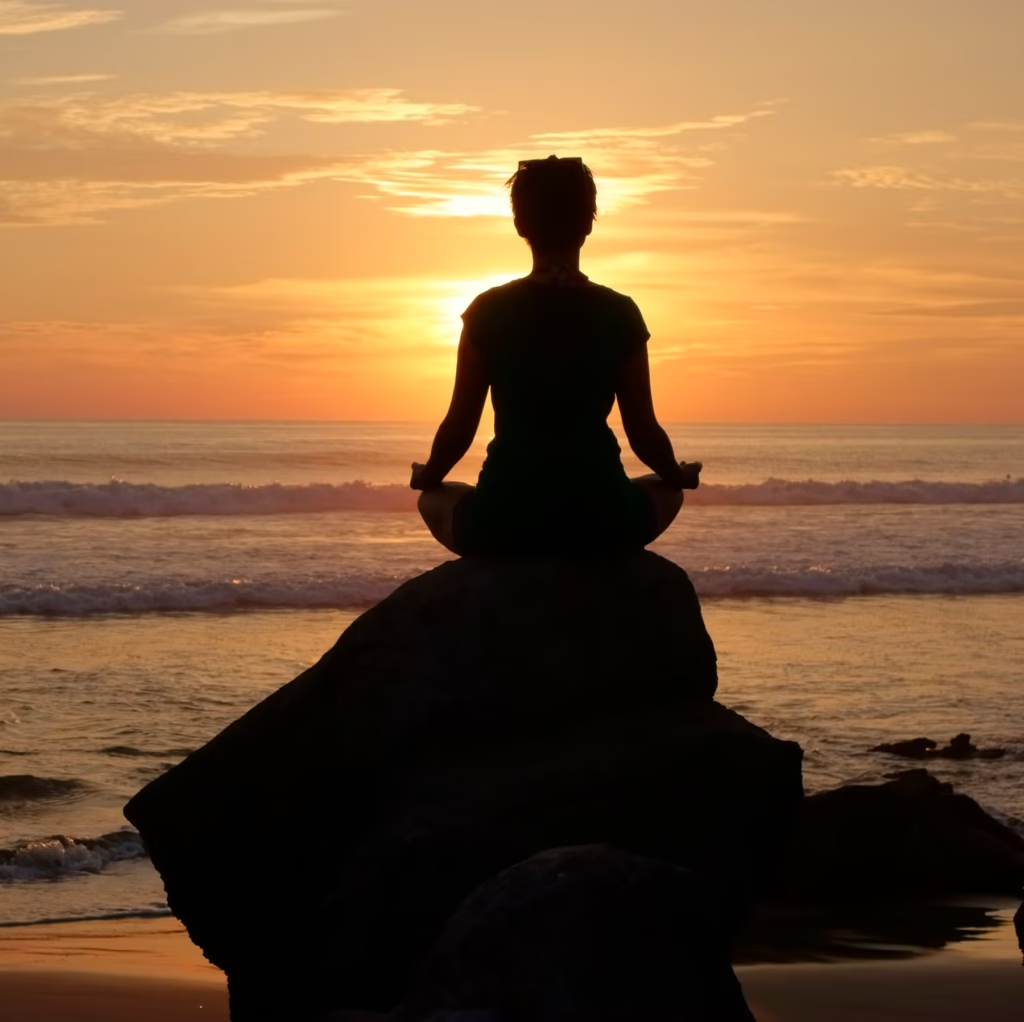
The secret to a calm, gentle lifestyle is intentional simplicity:
The secret to a calm, gentle lifestyle is intentional simplicity: doing one thing at a time, protecting your peace through firm boundaries, and savoring slow daily rituals.

One day a stranger came to Gautama Buddha and said, “I have something to ask you.” Buddha said, “Tell me what you have to say.” Then the stranger said, “I have never seen you angry, I have never seen you speak harshly, and I have never seen you get angry even when someone tries to provoke you.
What is the secret of your calm, gentle life?” After hearing this question, the Buddha said to the stranger, “I see that you will die in the next seven days. Try to live your life as you wish for these seven days.” After hearing this, the stranger became very sad. He bowed down to Gautama Buddha and went home in a depressed mood.
After seven days, the stranger came to Gautama Buddha and said, “Today is my last day. Please bless me.” Then the Buddha said, “How was your behavior during these seven days?” The stranger said, “I have lived a very peaceful life.” Every moment I thought that I only had a few more days to live.
So I didn’t want to waste my time in anger, frustration, or disappointment. Instead, I tried to get along with everyone, and try to be happy. Hearing this, Buddha said, I could tell you directly. But if I told you directly, you would not have realized it yourself. In this mortal world, each of us has a short time. None of us knows when life will end.
So, while we are alive, it is better to live peacefully, lovingly, without anger! Living this way centers on a few practical, everyday pillars:
Unplugging: Create dedicated time away from screens and notifications to reconnect with yourself.
Single-Tasking: Give your full attention to whatever is in front of you—whether that is drinking your tea, washing a bowl, or walking to the metro. It eliminates the anxiety of feeling like you should be doing more.
Setting Boundaries: Unlearn the guilt of saying no. Avoid chaotic environments or digital overstimulation on your rest days, and embrace the art of leaving tasks undone.
Mindful Movement: Instead of frantic workouts, prioritize gentle walks through nature or light stretching. Moving slowly brings your mind into the present moment. Practice Single-Tasking
Multitasking is a primary driver of modern anxiety. When you constantly switch between tasks—like checking notifications while working or watching videos while eating—your brain remains in a state of high alert.
Protect your focus: Turn off non-essential phone notifications to prevent external demands from fracturing your attention span.
Focus on one action: Commit fully to the task at hand. Whether you are eating a meal, reading an article, or washing a dish, do it without digital distractions.
Integrate Mindful Movement
Slowing down your physical body directly regulates your central nervous system. You do not need hours of intense exercise to achieve tranquility. Take tech-free walks: Spend 15 to 30 minutes walking outdoors without headphones. Tuning in to your footsteps and nature provides a natural grounding effect.
Slow the body: Incorporate gentle activities like slow-flow yoga or deliberate stretching to release stored physical tension.
Regulate the Nervous System :
When sudden stressors arise, simple somatic techniques can quickly lower stress hormones and bring your mind back to equilibrium.
Lengthen your exhales: Practice box breathing (inhale for 4 seconds, hold for 4, exhale for 4, hold for 4) to trigger your body’s automatic relaxation response.
Use the 5-4-3-2-1 rule: Ground yourself in the present moment by naming five things you can see, four things you can hear, three things you can touch, two things you can smell, and one thing you can taste.
Protect Your Boundaries
A gentle life requires you to consciously curate what you allow into your personal environment.
- Refuse unneeded urgency: Recognize that another person’s rush or panic does not automatically mean you must adopt their frantic timeline.
- Filter your consumption: Limit your exposure to sensationalized news and chaotic, high-stimulus environments. Prioritize quiet spaces like libraries, parks, or simple, uncluttered rooms at home.
The Low-Stimulus Morning Routine
A calm morning sets your nervous system’s baseline for the entire day. The goal is to delay high-dopamine triggers—like emails and news—so your brain transitions gently from sleep to wakefulness.Phase 1: The Waking Buffer (First 15 Minutes)
Open the blinds: Expose your eyes to natural sunlight immediately to regulate your circadian rhythm.Phase 2: Mindful Nourishment (Next 20 Minutes)
Listen to silence: Enjoy the natural quiet of the early morning, or play low-volume, ambient music.
Hydrate first: Drink a full glass of water before reaching for coffee or tea.
Single-task your beverage: Sit down and drink your morning beverage without looking at a screen.
No phone use: Avoid checking notifications or news for the first 30 to 60 minutes of the day.
Use analog alarms: Switch to a traditional alarm clock to keep your phone out of arm’s reach.
Phase 3: Gentle Activation (Next 15 Minutes)
Write three lines: Jot down three simple things you appreciate, or write out your single main goal for the day.
Do light stretching: Spend 5 minutes opening your chest, neck, and shoulders to release overnight stiffness.
Step outside: Spend 5 minutes on a balcony, porch, or by an open window to breathe fresh air.
Implementation Strategy
Start with one change: Pick just one habit—like the no-phone rule—and practice it for a week before adding more.
Prepare the night before: Lay out your clothes, ready your mug, and tidy your immediate living space.
Wake up 20 minutes earlier: Do this to eliminate the need to rush, rather than to add more tasks.
If you are asking about the most common obstacles that disrupt human peace in the morning, behavioral data and psychology point to three main culprits:
📱 1. The “Digital Hijack” (Checking Your Phone First)
- The issue: Looking at emails, news, or social media the moment you wake up.
- The impact: It immediately floods your brain with cortisol (stress) and dopamine micro-shocks, forcing you into a reactive state before your feet even hit the floor.
⏱️ 2. The “Snooze Button Cycle” (Fragmented Sleep)
The impact: It fragments your sleep, confuses your circadian rhythm, and triggers a state called sleep inertia, leaving you feeling groggy and rushed.
The issue: Pressing snooze multiple times to get “just a few more minutes.”
3. Micro-Decisions and Lack of Preparation
- The issue: Waking up without a plan and immediately hunting for keys, deciding what to wear, or staring into the fridge.
- The impact: These tiny, early-morning decisions cause immediate cognitive fatigue and create a frantic atmosphere.

Digital Distractions
This is usually a struggle of attention management.
- The root cause: The brain craves an easy dopamine hit first thing in the morning, making it incredibly tempting to scroll through social media, news, or emails while still in bed.
- The result: Lost time, increased anxiety, and starting the day in a reactive state based on other people’s agendas.
⏱️ Feeling Rushed for Time
This is usually a struggle of pace and preparation.
- The root cause: Leaving too many decisions (like picking an outfit or making breakfast) for the morning, or cutting wake-up times too close to departure deadlines.
- The result: A spiked heart rate, physical tension, and a sense of panic that carries over into the rest of the day.
Which of these two options feels harder for you to control right now?
What is the very first thing you physically touch or look at when you open your eyes?

M.Z.I. Dalton Zahir | Editor: +351938707061, PRESS NEWS: travellertimesinfo@gmail.com